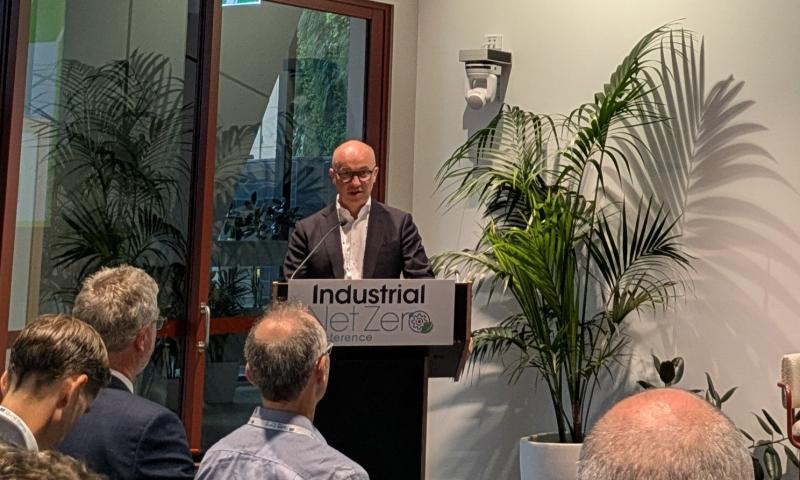

Live speech - HILT CRC Conference 2026
Gretta Stephens
Member - Climate Change Authority
Check against delivery.
May I acknowledge the Traditional Owners of the land where I am today, the Kaurna people, and pay my respects to elders, past and present.
I want to thank the Heavy Industry Low-Carbon Transition Cooperative Research Centre for the invitation, as well as the work you do.
Having worked in the heavy industry sector for over 30 years, particularly in steel and aluminium, and now serving as a Member of the Climate Change Authority, I deeply value your work.
We need partnerships between governments, industries, researchers and others with the capacity to unlock the pathways to decarbonising our economy if Australia is to succeed in its commitment to net zero.
And the HILT CRC is a stellar example of how that’s done at its best.
Let’s start with a reminder of what we’re trying to achieve, and why we’re doing it.
Climate change is no longer abstract. It’s here, and it’s having real life effects.
2025 was one of the warmest years on record.
In fact, only 2024 beat it.
And 2024 was the first year in which global average temperatures reached beyond 1.5°C above pre-industrial levels for the first time.
Both at home and abroad, that’s playing out in more intense and frequent bushfires, floods, droughts and natural disasters sparked by a changing climate.
It’s disrupting lives, livelihoods and communities; from farmers suffering the degradation of productive soils, to homeowners in flood-affected regions who can no longer access or afford insurance, government balance sheets having to carry the increasing cost of disaster recovery.
We were also warned recently by the United Nations Environment Programme that global temperatures are set to rise above the goal set in the Paris Agreement within the decade.
So, the task of reducing emissions now is urgent.
Every tonne of emissions removed from the atmosphere today, and every fraction of a degree of temperature rise we can avoid now, reduces the challenge of doing so tomorrow.
It’s about reducing costs and risks.
But it’s also about so much more.
By unlocking the next generation of investment and technologies that will strengthen our grid, we can give Australians the affordable and reliable power they can depend on, renew and expand our industrial base, and position Australia to prosper in a decarbonised global economy.
Heavy industry will be at the very centre of the transition.
Put simply, Australia will not achieve the nation’s emissions reduction objectives without a transformation of the profile of heavy industry.
Good ground has been made in decarbonising the electricity sector, as we increasingly supplement wind and solar with battery and storage solutions that make for a cleaner, stronger grid.
Electrification is accelerating across critical sectors like households and transport.
That all represents a down payment on our climate goals, as well as serving as the foundation for decarbonising heavy industry.
But there are a world of opportunities we are yet to successfully unlock, both at home and abroad.
Industry remains one of the largest sources of emissions in the economy, meaning if we get it right we can turbocharge progress.
The Authority’s Sector Pathways Review, for example, found that the industry sector accounts for approximately 15% of Australia’s emissions.
It’s also heavily exposed to conditions and pressures in a changing global economy, particularly in the region around us.
Major trading partners are pursuing their own decarbonisation strategies and increasingly seeking lower emissions inputs, materials and products.
As global markets evolve, industrial competitiveness will be shaped more and more by emissions performance.
It offers Australia a moment to not only reduce emissions at home and abroad, but to nurture new industries and products in demand on the world stage.
Here’s the good news, and the challenge, for Australia’s industrial sector.
Emissions have fallen by a quarter since 2005. The economy has grown by two thirds, in real terms.
That’s a significant achievement and we shouldn’t discount it.
Those gains also illustrate that emissions reductions are possible whilst maintaining a strong economy.
But we need to go further and faster.
The historical rate of emissions reduction is not sufficient to align with Australia’s future emissions goals.
The Authority’s analysis shows the pace of industrial decarbonisation needs to nearly double to align with the sector’s reference pathway consistent with Australia’s 2035 target.
Ultimately, the goal is to accelerate the pace of progress and go well beyond technologies and solutions already available.
One of the benefits of clear targets, when matched with enabling policy settings, is they provide a clear investment signal.
Unlocking the next generation of low-emissions technologies and fuels requires long-term policy and pricing signals.
It’s the best way to steer capital towards lower emissions outcomes.
The Authority does understand that if industrial decarbonisation was easy, we would already be doing it.
It’s a technological challenge, as well as an economic and structural one.
Many industrial assets are designed to operate for decades.
Significant upgrades or technology changes are frequently tied to maintenance schedules, refurbishment cycles or major capital replacement decisions valued in the hundreds of millions or more.
Many industrial processes also require extremely high-temperature heat.
While electrification is emerging as a powerful decarbonisation pathway, some applications remain technically difficult or expensive to electrify at commercial scale.
In some cases, emissions come directly from industrial processes themselves rather than from energy consumption, and fuel switching alone does not eliminate them.
Finally, many Australian industries compete in highly traded international markets.
Producers often have limited ability to pass additional costs on to customers, where they are competing against firms operating under different policy settings.
What I would say is that while we know abatement won’t be easy or linear, it is achievable.
Less than 20 years ago, large-scale renewable generation was viewed as impractical and unable to sustain a dependable grid.
Today, it increasingly powers the nation’s electricity market.
Battery technology that was unimaginable is now flooding into the market.
It should give us hope that step changes in emissions reduction solutions are possible when we stay focused on the investment, policy and infrastructure barriers to the emergence of solutions.
We also have a clear line of sight on the potential pathways to success.
The Authority has always understood there won’t be a single dominant technology to get us there.
The Authority's Sector Pathway Review found that near-term emissions reductions come from improvements that are available today: energy efficiency, renewable electricity, recycling, circular economy initiatives and select electrification of lower-temperature processes.
But reaching deeper reductions will require a broader suite of options.
For example, low-emissions fuels may play a role where direct electrification remains challenging.
Feedstock changes and new production processes may transform industries such as iron, steel, fertiliser and cement.
And where alternatives remain limited, carbon capture, utilisation and storage may contribute to emissions reductions.
That’s why we have to maintain as broad a set of pathways and as open a mind as possible.
A set-and-forget approach won’t cut it.
Instead, there’s a case for following the marginal abatement cost curves and deploying technologies as they mature and become available.
As we’ve seen recently with batteries or transport electrification, technology and pricing move fast and when it does, solutions saturate the market and enable decarbonisation at scale.
The role of the Safeguard Mechanism in shaping decisions on solutions that represent an investment in abatement will be significant.
Covering over 200 of the nation’s largest emitters that account for around 30% of the nation’s emissions, its influence is substantial.
The Safeguard covers many of Australia's largest mining operations, LNG producers, metals processors, refiners and manufacturers.
Reforms undertaken in 2023 to the Mechanism encouraged participants to actively decarbonise, using a mix of onsite abatement and carbon credits.
Gross emissions have fallen by over 4%, and net emissions by more than 12% since the reforms.
But it’s early days and in many cases, broader factors beyond onsite abatement are likely attributable.
The job of policy makers and organisations like the Authority is to ensure the Safeguard Mechanism remains fit-for-purpose.
Some of you may be aware that the Climate Change Authority is playing an important role in the Government’s review of the Safeguard Mechanism.
It’s consistent with the Authority’s core mandate, which is to provide independent, expert advice on both Australia’s emissions reduction goals, as well as the best pathways to achieve them.
We have been looking at a few issues.
One is how much the scheme should contribute to the 2035 target and what decline rate is needed to achieve that.
The other area of exploration is to understand the extent to which onsite abatement is being driven by the reforms introduced in 2023, and whether further incentives are required.
That includes understanding the role Australian Carbon Credit Units are playing, building on the Authority's recent review of the ACCU scheme.
Ultimately, the Authority needs to consider the policy settings that will best create the conditions necessary to accelerate future investment in abatement.
And there is value in setting a framework now that gives the policy stability and predictability needed to support long-lived investments.
As important as the Safeguard Mechanism is, decarbonisation requires a broader policy ecosystem.
Different policies perform different functions.
For example, some support innovation, moving technologies from research to demonstration and eventually to commercial deployment at scale.
Mechanisms like the Future Made in Australia funding, ARENA, the Clean Energy Finance Corporation or the National Reconstruction Fund’s Net Zero Fund fit squarely in this category.
What’s also important is how quickly the policy landscape has evolved as Australia’s climate ambitions have grown, along with the challenges of decarbonisation.
Rewiring the Nation and the Capacity Investment Scheme simply didn’t exist 5 years ago when HILT CRC started, but they now help to ensure Australia has the generation, storage and transmission assets needed to build a stronger, cleaner grid.
As I mentioned earlier, the Safeguard Mechanism didn’t exist in its current form.
And the Net Zero Economy Authority has given a sharper focus to efforts to shepherd industries, workers and regions through the shift to net zero emissions.
What I’d also emphasise beyond the value of any individual policy or funding measure is how they work collectively to foster investment and lower emissions.
Scalable, profitable and globally competitive needs to be our motto.
Australia is well-placed to take on this challenge.
In several of our reports, the Authority has noted our strong renewable resource base, large reserves of critical minerals, established industrial capabilities and long-standing trade relationships.
These strengths create genuine opportunities for new low emissions industries.
However, having opportunities is not the same as realising them.
Alignment matters and will underpin the progress that comes if we successfully piece together the demands of project sponsors, the needs of international partners and the capability Australia has at its fingertips.
It will help overcome the risk that a particular blockage or barrier at one point of the ecosystem slows deployment of clean energy technology with widespread benefits.
Given the demands we have at home and scale of opportunity abroad, the imperative is on us to get it right.
In May this year, the International Energy Agency reported that it expects around $2.2 trillion of investment to go into low-carbon solutions in 2026. That’s almost double what will flow into fossil fuel investment.
That represents a rising wall of capital waiting to be deployed to the decarbonisation of our energy grid and helping Australia’s industrial sector seize the opportunities of the transition to net zero.
The Mission Possible Partnership Clean Deal Monitor estimates there is more than $264 billion of clean industry projects in the pipeline in Australia.
And if they’re delivered, they’d yield 86 million tonnes of emissions abatement.
So, we need to roll out the red carpet for investment through fit-for-purpose policy settings that enable and encourage investment and coordination.
Governments, businesses and consumers around the world are already acting to reduce their carbon risk and decarbonise their economies.
That’s particularly true in Asia, home to some of the fastest growing populations and economies in the world.
We can tap into our reputation as a reliable trading partner, the abundance of natural resources at our disposal, our immense industrial capability and access to capital in a way that turbocharges emissions reductions and prosperity at home by servicing demand abroad.
The Climate Change Authority has looked at it through a concept that we call “decarbonisation deals”.
It’s about reducing the barriers that prevent industrial decarbonisation, particularly delays to investment caused by suppliers needing to know that markets exist for their products before they commit.
We need to help mobilise the investment, infrastructure, supply chains and partnerships needed to deploy new technologies at speed and scale.
Alignment of effort needs to improve across governments, financiers, industry and trading partners with like-minded emissions reduction commitments.
Take, for example, the prospect of Australia building on what is already a vibrant bilateral trading relationship with Korea.
Australia can use clean energy to produce green iron, which in turn supports green steelmaking and automotive manufacturing in Korea, and those products find their way back here to be powered by the same renewable resources that helped create them.
That’s a win for the economy, a win for industry, a win for our climate and a win for the future of low-emissions supply chains.
In conclusion, let me reinforce, we have a firm understanding of the climate threat and the emissions reduction task confronting Australia. We are realistic about the scale of the transformation that needs to occur in the industrial sector. We know that the policy toolkit needs to meet the moment and continue to respond to the needs of investors and industry, but we believe the economic dividend on offer is enormous if we get it right.
I’m confident that we can deliver on our aspirations to unlock new technologies and projects, facilitate the investment needed to usher in a meaningful reduction in our carbon footprint. This will position Australia as a pioneer in servicing the demands of a world in transition.
Thank you for being such active participants in the process of change, and I look forward to continuing to work with you.
Further reading