
FRAME Conference speech
Professor Lesley Hughes
Authority Member - Climate Change Authority
Check against delivery.
FRAME Slides - Climate Change Authority Fossil Methane Project
I also want to acknowledge the Ngunnawal people as the traditional owners of the lands we meet on today and pay my respects to their elders and communities, past and present.
Before I begin, I need to be clear about who I am representing today. As my bio in the notes indicates, I am a Councilor and Director with the Climate Council of Australia, but I am not representing that organization today. Instead, I am representing the Climate Change Authority where I have been a member since 2022.
The Authority is an independent advisory agency
The Authority is an independent statutory agency set up to provide the Government of the day with independent climate advice.
That advice includes statutory reviews – such as of the Australian Carbon Credit Unit, or ACCU Scheme, and the National Greenhouse and Energy Reporting, or NGER, Scheme.
We provide annual progress assessments of how Australia is tracking towards our climate targets, which, of course, include the new 2035 one.
As many of you will recall, the Authority last year advised the Government that a target of cutting 2005-levels of carbon emissions by 62-70% by 2035 was both ambitious and achievable.
The Government accepted that advice, and the target has now been submitted to the United Nations.
Authority members have broad skills and expertise
I’m one of 2 scientists among Authority members, including, of course, Professor Tony Haymet, Australia’s Chief Scientist, who serves as an ex-officio member.
The Authority’s chair is Matt Kean, a former treasurer, energy and environment minister in NSW. You may have seen him in public, discussing climate issues.
Other Authority members bring expertise in indigenous traditional knowledge systems, agriculture, renewable energy, indigenous knowledge systems, business, public policy and investment.
The Authority’s fossil methane project
The Authority’s work program this year is another packed one, including the fifth ACCU scheme review, and providing input to the Government’s review of the Safeguard Mechanism – the primary tool to reduce emissions at Australia’s biggest polluting facilities.
But of particular relevance to this meeting, we are also taking a deep look at opportunities to radically reduce fossil methane emissions.
This methane project began as a recommendation in our 2025 Annual Progress Advice, and it builds on the Authority’s earlier work on methane measurement under the NGER scheme.
Our 2023 review of the NGER legislation made 25 recommendations, including several aimed at improving how fugitive methane emissions are estimated and verified.
Some of these recommendations focused on strengthening the existing NGER methods and improving transparency.
The Government has already started implementing a number of those changes, including phasing out Method 1 for fugitive methane emissions from open-cut coal mines covered by the Safeguard Mechanism, adding a more sophisticated method for gas flaring, and publishing methane, carbon dioxide and nitrous oxide emissions for Safeguard facilities.
Another recommendation from our review was to establish an expert panel, now chaired by Dr Cathy Foley, to examine whether newer atmospheric or “top-down” approaches could strengthen methane estimation in the future. There are several people on the panel who are attending this meeting.
The Foley Panel runs until mid-2027. We take a strong interest in that work, but we are not seeking to duplicate it. Rather, the focus of our project this year is the question of how Australia could reduce fossil methane emissions as rapidly as possible.
Indeed, in compiling our advice to the Government on Australia’s 2035 emissions reduction goal, we factored in an important role for the reduction of methane, particularly from fossil fuels.
And we noted in that advice that the technology to cut fossil methane emissions is already available.
The Authority has released a consultation paper inviting public input, to build on our own research and analysis.
We’d be grateful if you could help spread the word, so we can draw on the best methane expertise before finalising this part of our 2026 Annual Progress Advice later this year.
Why focus on fossil methane
You’ll already have heard from our earlier speakers about why methane matters.
But you may be curious about why the Climate Change Authority chose to focus on fossil methane rather than all sources of the gas, including the largest source, agriculture.
As our consultation paper will note, achieving Australia’s emissions reduction targets will require methane emissions to fall across all sectors of the economy.
The heat-trapping potency of methane is what ultimately matters. Because methane is short-lived, reducing it can slow warming in the near term, not just the long term.
While there are exciting technologies such as feed supplements being developed for reducing enteric methane, the issues of scale and distribution in the agricultural sector remain challenging and we see the opportunities for curtailing fossil methane to be greater in the near term.
In addition, the sources of fossil methane emissions are relatively concentrated both in terms of the numbers of emitting locations and the companies involved.
Through our consultation paper, we would like your help in identifying the main deployment speedbumps for fossil methane technology and keen to understand how those bumps can be flattened.
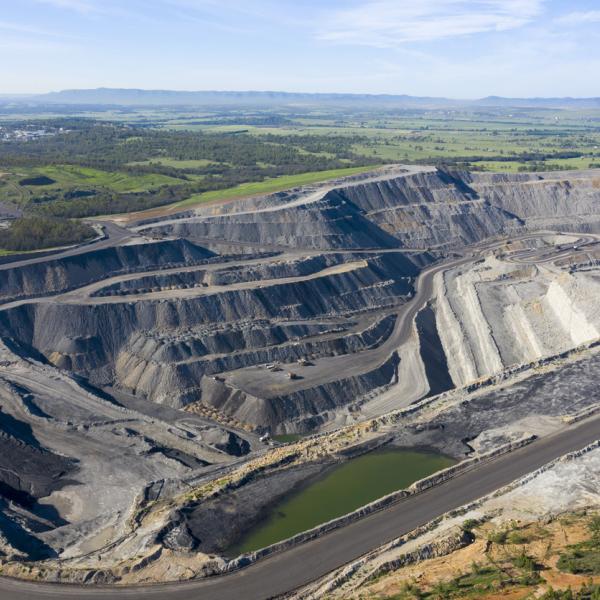
In coal mining, one option is to drain methane before mining, and also from mined-out areas after coal has been extracted, then either flare it or put it to use. Methane in ventilation air can also be treated through oxidation technologies in suitable underground mines.
For the gas sector, the approach probably favours reduced venting and better flaring, along with leak detection and repair. The replacement of higher-emitting equipment may also be suitable and commercially viable.
After all, the industry has long argued that every molecule of gas that leaks is a molecule it couldn’t sell to a customer.
Commonwealth existing policies
The next couple of slides give a bit more of a pictorial view of what I’ve been discussing.
On this slide, you can see the relative size of estimated fossil methane emissions from coal (the dark grey – the majority) and gas (in blue – about a quarter).
As the left side of the slide indicates, we have some existing policies at the national level to understand our methane emissions and drive them lower.
Central to these policies is the Safeguard Mechanism, in place since 2015 and reformed in 2023 to cut pollution from Australia’s major industrial facilities, including coal mines and gas facilities.
The Safeguard Mechanism covers around 75% of Australia’s fossil methane emissions. That is in the order of 22 to 23 million tonnes of carbon dioxide-equivalent each year.
Put another way, methane makes up a material share of all emissions covered by the Safeguard Mechanism — around 17%.
These emissions have remained relatively steady since the 2021-22 year – at least according to the measurement approaches we use under the NGER scheme.
The 2023 Safeguard Mechanism reforms ensure those facilities have a financial incentive to cut pollution.
It does this by setting a binding limit, or ‘baseline’, on each facility’s net emissions. Baselines decline by 4.9% annually.
Companies unable to meet the reductions are required to make good, so to speak, by purchasing credits from firms who can do better than their baselines. Alternatively, these companies can purchase an equivalent offset in terms of an amount of Australian Carbon Credit Units, or ACCUs
So, the starting point for our review is not a blank sheet of paper. The Safeguard Mechanism has been designed to create an incentive for large facilities to reduce fossil methane, and some states are already using direct regulation and other measures to push further.
The practical question for us is what current settings are already likely to deliver, where barriers are still holding back cost-effective abatement, and where additional or better-targeted measures might be warranted.
As most of you will be aware, Australia’s emissions accounting framework uses the global warming potential of gases over a 100-year period, referred to as GWP-100. Under NGER and the Safeguard Mechanism, methane emissions are converted into carbon dioxide-equivalent on that basis. We’re not proposing to replace GWP-100 as the basis for Australia’s accounting framework.
However, methane’s near-term warming effect is much greater than carbon dioxide. So, one of the questions in our consultation paper is whether a shorter-term lens — such as GWP-20 — should matter more when governments or investors think about the value of methane abatement in the near term, even if the accounting framework itself doesn’t change.
State and territory existing policies
It’s important to note, of course, that the Commonwealth Government is not the only player on the field and that
States and territories can also influence methane outcomes through their regulation of onshore fossil fuel activities.
The regions with the highest fossil methane are Queensland and NSW. Queensland’s annual emissions exceed those of all other states and territories combined.
NSW, for instance, has recently announced new rules for methane. Fossil methane amounts to about 11% of the state’s overall greenhouse gas emissions, so doing more to address it can contribute to achieving the state’s emissions goals.
NSW’s Environment Protection Authority will be requiring methane reductions in underground coal mines. The requirements are being phased in from 2027. Under some circumstances ventilation air methane (VAM) will be required towards 2030.
Queensland too has its own statutory rules, including restrictions on the release of coal mine waste gas. The state also has a Low Emissions Investment Partnership program to assist mines digging coking coal used in steelmaking to meet reductions required by the Safeguard Mechanism.
Western Australia does not have specific measures targeting fossil methane, although they have endorsed the Zero Routine Flaring by 2030 goal advanced by the World Bank.
Consultation questions
One reason the Authority was particularly keen to have a presence at this meeting is that this room contains exactly the kinds of people we hope will engage with the consultation.
We’re asking for practical help in 4 main areas:
- what technologies are genuinely ready now
- what is stopping faster uptake
- how much current policy settings are already likely to deliver
- whether the near-term climate value of methane should be reflected more clearly in policy or investment decisions, without changing Australia’s GWP-100 accounting framework.
So, if you work on methane science, mine operations, gas systems, project delivery, regulation, investment, or measurement and verification, your submission can directly help shape the Authority’s advice. What will be most useful to us is practical evidence — what works, what does not, what is getting in the way, and what kinds of policy response are most likely to make a real difference.
How we think about policy options
Finally, it’s important for me to outline the 4 broad criteria the Authority must consider under its charter when delivering advice to the government. We are required to consider environmental effectiveness (i.e. in emissions reduction), equity, cost effectiveness and the simplicity and feasibility of policy implementation.
We want to hear from you
And so, to finish.
The Authority has been active on methane for some time, and we will remain so. Our earlier work on the NGER scheme helped set the stage for important improvements in methane measurement and estimation, and for Cathy Foley’s Expert Panel.
But the focus of this project is the practical question of how Australia might accelerate fossil methane abatement.
That is where we would really value your help.
If you have evidence on technologies, barriers, operational experience, regulation, investment decisions or policy design, we want to hear from you.
Your submissions to the consultation paper will help shape the Authority’s advice to Government later this year.
You may also be interested in: