Energy Networks Australia
The Hon Matt Kean
Chair - Climate Change Authority
Check against delivery.
May I begin by acknowledging the Kaurna people as the traditional owners and custodians of the land on which we meet today.
I’d like to pay my respects to elders, past, present and emerging, and extend that respect to any First Nations people here with us today.
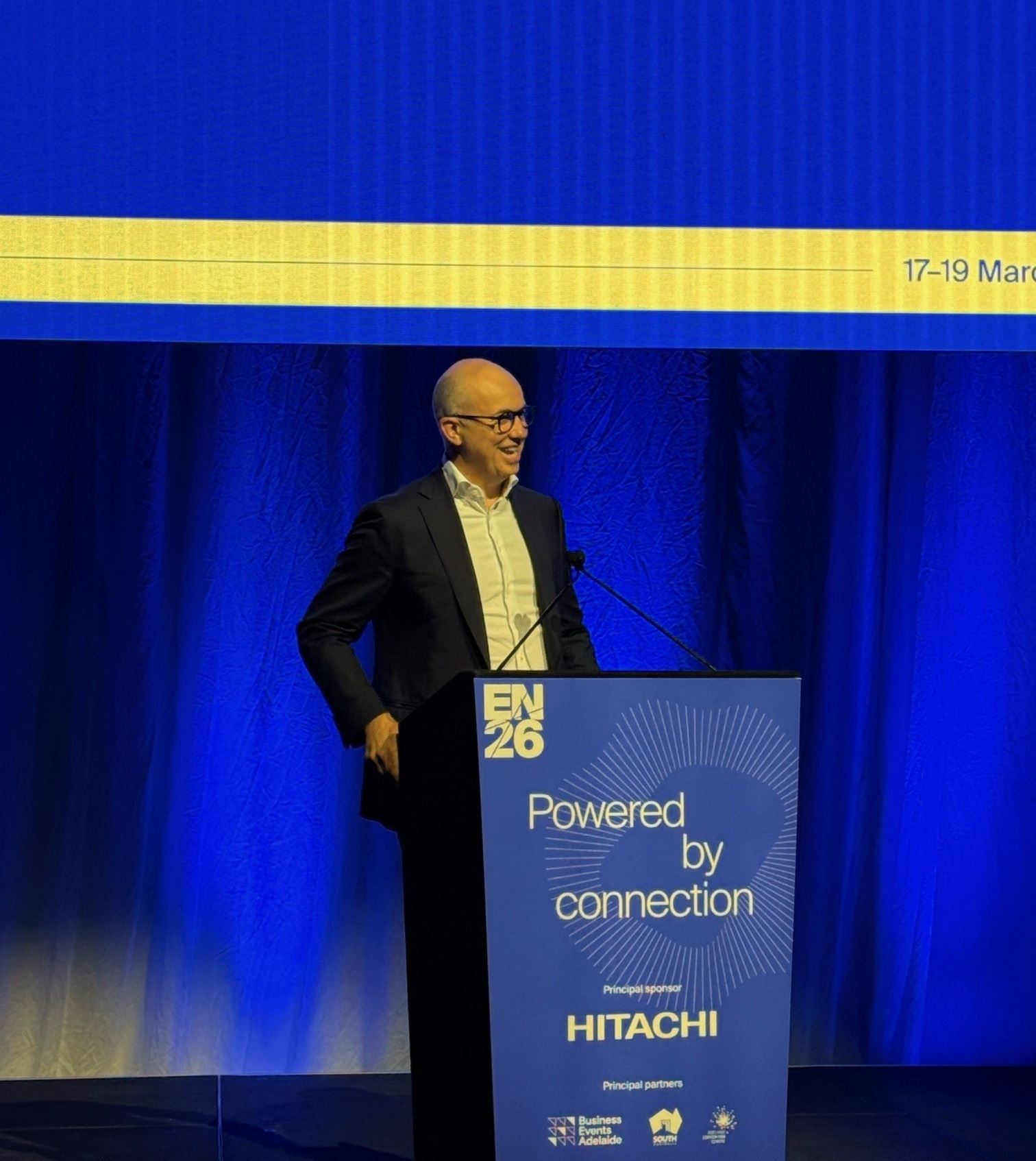
Can I also thank Energy Networks Australia for the invitation to address you at EN26.
We line in unpredictable times, but that doesn't mean we can't anticipate certain trends that are sufficiently "mega" to reshape our lives, no matter the political or geopolitical cycles.
One of those trends involves a subject - no doubt much discussed at this timely conference – the electrification of just about everything.
This electro-revolution will create exciting new opportunities for consumers and companies alike.
Regulators will have to be nimble if we’re going to maximise the potential for innovation – and importantly, ensure that households get their fair share of the benefits.
The surprising – indeed, stunning – success of the take-up of home batteries reveals the scale of appetite in the community for new products and new ways of managing energy.
As of yesterday, we were just shy of 280,000 storage units installed under the Government’s Cheaper Home Battery Program since last July.
The program has more than doubled the amount of home batteries, adding about 7 gigawatt-hours(Opens in a new tab/window) of capacity and the tally rises by the day.
Indeed, in the program’s first eight months, more storage capacity has been added than the 12 largest in-service big batteries combined, according to the Clean Energy Regulator.
Back in July, the average battery going in was about 17 kilowatt-hours, now the average storage unit exceeds 30 kilowatt-hours.
These takeup rates have seen the government revise up its original estimates of $2.3 billion in support to an estimated $7.2 billion over the next four years. And while support for larger units will be pared back from 1 May, it’s clear likely household enthusiasm for storage has a way to run yet.
It’s worth noting too that of Australia’s 4.2 million homes with solar panels, about half of these solar units are smaller than 6 kilowatts of capacity.
As batteries roll out, we can expect upgrades of solar systems to follow. New solar systems already average about 10 kilowatts in size, according to Green Energy Markets.
The rapid evolution of this segment of the industry will require a few adjustments when the Australian Energy Market Operator finalises its Integrated System Plan by mid-year.
Its draft ISP(Opens in a new tab/window), released j last October, expected households' storage capacity to rise to 10 Gigawatt-hours by 2029-30, but in fact, we’ve already surpassed that level and we’re not even to the end of the first quarter of 2026.
The price of lithium-ion batteries has been falling for some years, dropping by more than a third between 2022 and 2025 even as demand soared, according to Bloomberg New Energy Finance.
That price reduction is making it possible to envisage much greater application of storage, whether in the form of large solar-battery hybrid projects or even standalone power systems in remote parts of Australia.
For instance, Western Power, WA’s state-owned regional electricity network operator, has been piloting how to reduce so-called fringe-of-grid customers with standalone power systems and no wonder, 52% of the company’s network serves just 3% of its clients, according to RMIT energy veteran, Alan Pears.
Install solar panels, storage and a back-up generator, and hey presto!
- the supply becomes MORE reliable
- solar meets up to 95% of total power needs,
- customers are happier
- and it’s cheaper than upgrading the poles and wires over great distances, according to the results of a pilot program.
These are the types of disruptive innovations that, - if well-coordinated, could reduce total investment needs, while delivering a more resilient grid and lower carbon emissions to boot.
Indeed, integrating distributed energy resources could create $19 billion in energy system net benefits by 2040(Opens in a new tab/window), according to independent energy expert, Gabrielle Kuiper.
While those system benefits are important, I would like to conclude by circling back to the theme of electrification, and what these changes might mean for households.
You may have read commentary of late in relation to the Middle East war that Australia continues to rely on fossil fuels for the bulk of our primary energy needs.(Opens in a new tab/window) That’s true, even as renewable energy’s penetration of the electricity grid exceeds 50%(Opens in a new tab/window).
What we need to focus on, though, is USEFUL energy It’s not much good if half your energy supply is wasted.
A recent report(Opens in a new tab/window) by the CCA’s counterpart in the UK, the Climate Change Committee, calculated that country’s energy system, dominated as it is by oil and gas, required 1900 terawatt-hours of primary energy to generate a useful energy output of around 900 TWh.
On a per-household basis, the annual cost of that wasted energy was the equivalent of about $A3750, or 2000 pounds – even excluding the cost of the carbon emissions.
The fuel efficiency of a typical combined-cycle gas power station in the UK is only 54%, the report found.
Australia’s average fuel efficiency in power generation would be much lower, given our aging fleet of coal plants.
“Renewable sources such as wind and solar do not face these economic losses,” the UK report noted.
Electric vehicles, meanwhile, are up to four times more efficient than a typical petrol car. That’s an extra reason to get off imported liquid fuels.
And heat pumps, use between a third and quarter the energy of gas boilers, the UK report found.
AEMO, as it happens, has been also trying to calculate the benefits of residential and small commercial customers shifting from gas to electricity and their results echo the UK’s.
AEMO’s Gas-Electricity Meter Data Linking Project(Opens in a new tab/window) - not quite the snappiest of titles – found standalone homes in Melbourne and Geelong with electric heating, electric hot water and rooftop solar were using 54 gigajoules less gas on average, compared with houses with gas heating, gas hot water and no solar.
The lack of gas use isn’t so surprising but interestingly, the electric-centric homes were importing just 0.1 megawatt-hours more electricity from the grid to run their more-efficient appliances and exporting 3.8 megawatt-hours of power back to the grid, as a bonus.
Homes in milder climates, such as in Newcastle, Sydney and Wollongong, also saw big drops in gas use. They drew a bit more power from the grid but also exported more from their solar panels than the homes in Victoria.
Among the takeaways from the AEMO report is that the spread of electrification of appliances – plus electric vehicles – will shift peak demand increasingly from summer to winter.
Home energy storage and advanced load-shifting technologies will play an important role in balancing demand peaks and troughs, and easing strains on the grid, AEMO found.
With the right regulatory settings and incentives for consumers and energy firms alike, these changes are entirely manageable.
To sum up, then, “Power to the people” is no longer the mantra of the Hippy Era but a lived reality for many, and those legions will keep growing in number.
Networks that can change with the times will prosper too.
Thanks for listening, and all the best for the rest of the conference.
Further reading