Check against published version. Published in Australian Financial Review(Opens in a new tab/window) on 12 May 2026.
Decarbonisation progress
The Hon. Matt Kean
Chair - Climate Change Authority
Fatih Birol, executive director of the International Energy Agency, is surely right when he recently declared global perceptions(Opens in a new tab/window) of the risk and reliability of fossil fuels would alter because of the unresolved Middle East war.
Nobody can yet say how long it will take to unblock the Strait of Hormuz, through which about a fifth of the world’s oil and fossil gas transits in peace time. Nor can we tell how much more damage will be done to the region’s energy production and port capacity before the conflict formally ends.
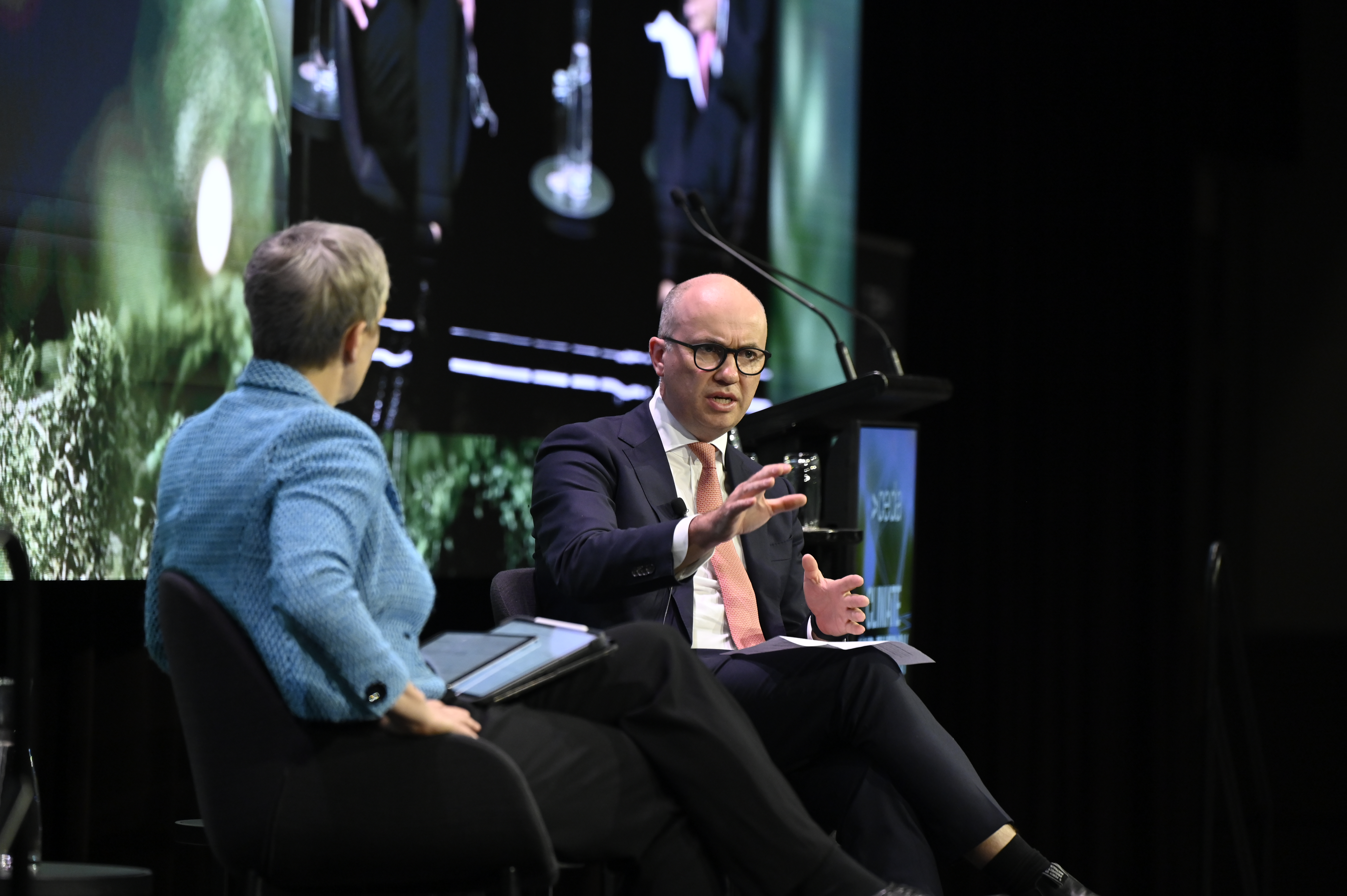
But, as I told the Committee for Economic Development of Australia’s recent climate and energy summit, the shift off fossil fuels was already well underway before the latest shots were fired. And it will continue – with renewed gusto – well after the guns fall silent and drones stay grounded.
That transition remains very much in Australia’s interest, and not just because the climate imperatives for action haven’t disappeared amid the geopolitical gyrations. (A looming El Nino event might serve as a reminder.)
With our abundant renewable energy resources above and almost all the necessary critical materials under the ground, Australia is in pole position to win in a decarbonising world.
Cues to exit fossil fuels were already being taken by Australia’s families, farmers, businesses well ahead of this latest Middle East mayhem.
Indeed, we had a global rehearsal of this disruptive threat in 2022 when Moscow’s illegal invasion of Ukraine triggered a scramble to substitute energy supplies from Russia as trade sanctions were rightly applied.
Electric car sales, which had been motoring along well with a 9 percent share of the global market in 2021, hit the accelerator to reach about a quarter-share at the end of last year. Electric buses alone claimed a 43 percent market slice, according to Bloomberg New Energy Finance.
In fact, worldwide sales of cars with petrol- or diesel-powered engines have been on the skids since 2017. They are now down by roughly a quarter from their peak, Bloomberg says. This latest crisis will make a hard sell even harder at car yards, near and far.
Indeed, one in six new vehicles sold in Australia in April was an EV(Opens in a new tab/window), with 110 EV models available. Including pure hybrids and plug-in hybrids, the share of non-conventional new cars was just shy of half the total market(Opens in a new tab/window).
Australians, of course, have enjoyed deck-chair seats in a lot of this global transition. More than 40 percent of our households can glance up with some pride at the solar panels on our roofs, a world-leading proportion.
That more than 380,000 homes have bought batteries - 10.7 gigawatt-hours' worth - since the government’s battery subsidy program began in July further burnishes our DIY energy generation and storage credentials. One-tenth of global battery capacity has lately been taken up by Aussies(Opens in a new tab/window).
The inherent inefficiency of fossil-powered engines – including the turbines in our power stations – has created a physical vacuum that “clean energy everything” is now starting to fill.
From heat pumps to hydrogen, and biodiesel to sustainable aviation fuel, the competitive scales of fossil-fuel alternatives were already tilting before the war raised the spectre of supply shortages and sent prices skyward.
Some, of course, have sought to capitalise on the chaos, calling for more gas and oilfields, and new refineries underwritten by governments.
The timeline for such projects, though, would be counted in years – perhaps a decade. Should they ever materialise, their likely high development costs would mean consumers could expect little in the way of energy price relief.
By then, the technology propelling electrification – including ever-more efficient solar panels and cheaper batteries – will have dimmed the appeal of fossil fuels yet further.
For governments, the priority should be to smooth the transition with clear, consistent, well-explained policies that help communities adjust.
The popular calculus of risk, though, has shifted - and that’s one genie that can’t be rebottled.
Further reading