
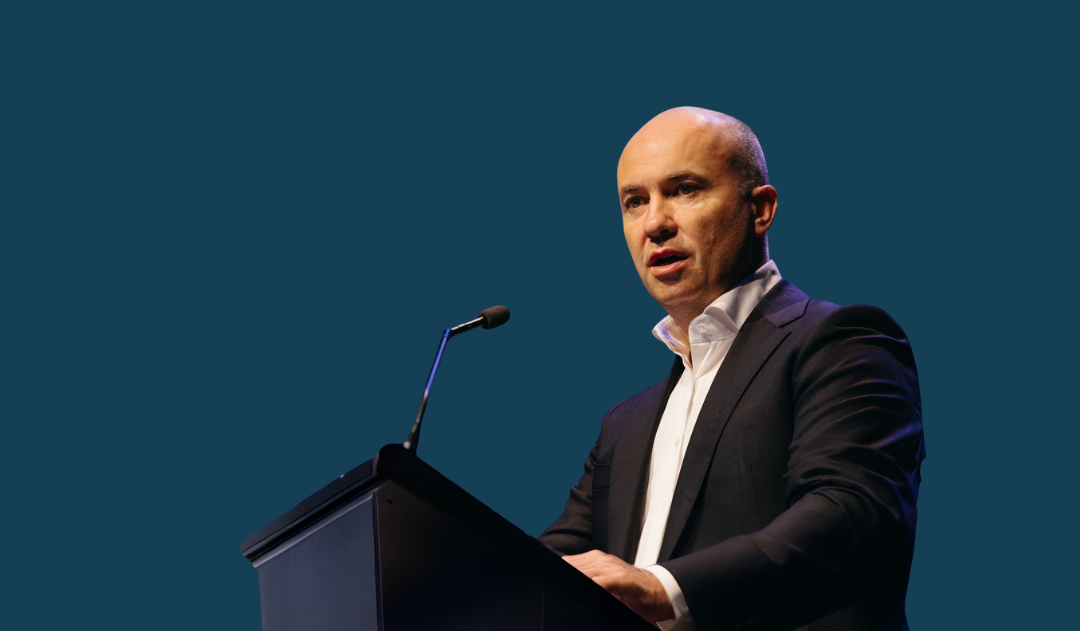
Clean Energy Council Summit keynote
The Hon. Matt Kean
Chair - Climate Change Authority
Check against delivery.
May I begin, though, by acknowledging the Gadigal people of the Eora Nation as the traditional owners of the lands we meet on today, and pay my respects to their Elders, past and present.
First Nations communities, particularly in remote regions of this beautiful country, are on the front line of climate change.
We must help fortify their communities’ resilience while minimising the menace posed by rising atmospheric concentrations of greenhouse gases.
This will require action on many fronts, including accelerating the pace of the energy transition and unlocking the great potential of distributed energy resources/storage. Distributed generation and storage will be an increasingly important part of the broader solution.
Who pays for the transition is an important question, but we can anticipate who will bear the heaviest burdens if we don’t decarbonise our economies, and it won’t be the well-to-do.
If there’s a common theme, though, to this summit – and my keynote today – it must be disruption.
As a general subject, the Climate Change Authority sought to address the rapid developments in the electricity sector last year with a report, Unlocking Australia’s clean energy potential.
We examined there how Australia can make better use of generation and storage, connected to local distribution networks.
We also looked at how coordinated household, commercial and community batteries could reduce pressure on the wider grid, improve flexibility and lower system-wide investment needs.
To make the most of these disruptive changes, we suggested it was vital that benefits are shared fairly, and those points are just as apposite today.
It means all of us – households, businesses, regulators or governments – need to be informed and, for some participants, reformed, as we go.
But my take is that we have ample cause for optimism, so don’t drown your sorrows at the farewell drinks just yet!
The electricity sector is, of course, both a target and source of disruption.
A more resilient grid isn’t just an engineering challenge.
We’re going to need to marshal consumer and capital markets, help users during a cost-of-living squeeze, and drive down emissions.
The good news is that these objectives reinforce one another. A successful energy transition can strengthen energy security by relying more on Australia's own resources, while helping to lower costs over time through cheaper generation and better use of the grid.
That means managing the grid to become more flexible – both to accommodate and enable new sources of supply, and also to match evolving patterns of demand.
A resilient electricity system does not depend on any single technology. It comes from a portfolio: renewable generation, transmission, storage across different durations, flexible demand, consumer energy resources and dispatchable capacity when needed. The challenge is assembling that portfolio at least cost and sharing costs and benefits fairly.
Community confidence and durable public support for the transition cannot be taken for granted.
Delivering outcomes, including greater agency for consumers and lower prices, will go some way towards shoring up that support.
Australia’s battery bonanza, whether for large or small devices, is squeezing out expensive gas and even coal.
As a result, we have seen another quarter of falling wholesale power prices in the National Electricity Market
Mind you, supporting more productive use of energy in the first instance should always be a priority.
Waste not, want less, you could say.
Electrification is, of course, the logical next step, especially when we can generate those electrons from Australia’s abundant solar and wind resources.
That way, we’re also not beholden to the geopolitics of distant warzones. Reducing exposure to imported fossil molecules looks increasingly like a smart move, the longer the Iran War rolls on.
It’s helpful, too, that Australian consumers have been enthusiastic adopters of new energy technology.
If we weren’t, we wouldn’t be leading the world in rooftop solar penetration, and now the take-up of home batteries.
Paul Graham, who joins the panel after this speech from CSIRO, will no doubt expand on the findings of his latest GenCost report.
But the settings have been clear for some years.
Firmed solar and wind is cheaper than new fossil fuel plants, especially so when there’s a carbon constraint.
Those with legitimate concerns about rising energy bills would no doubt have bigger reasons to worry if we headed down a nuclear pathway given that source’s stubbornly high costs.
The overwhelming amount of R&D going into clean energy research helps explain why the ratio of global investment on clean energy versus the fossil variety remains about 2-to-1.
And whose portfolio is betting that it will get cheaper to extract fossil fuel deposits as prospecting extends to remaining hard-to-reach locations?
In effect, global investments in clean energy is running at around twice the level of investment in fossil fuels. One swag of money is going into maintaining the status quo. The other is driving advances that we propel yet further gains.
Batteries, of course, are increasingly part of this story, not least because of the success of the Government’s Cheaper Home Battery Scheme.
You’ll hear from AEMO’s Samantha Christie on this issue during the panel session, but it’s clear households are helping the grid even if they don’t realise it.
Those with home batteries were charging up during the periods of the day when supplies were abundant. When evening came, they were using their storage, delaying their use of grid power.
AEMO has been tracking this behaviour, with one day of particular importance, January 27 this year, in one state, Victoria.
It was Victoria’s hottest day on record, and the state’s highest grid demand day ever.
Looking at the rise in background temperatures because of climate change, you can imagine days in the future when the mercury will climb higher.
Perhaps this summer, given the El Niño that’s building with some alarming size and speed in the Pacific. In any case, on that day last January, Victorian households with solar and batteries were observed to have reduced average evening peak load by 1.4 kilowatts(Opens in a new tab/window).
Doesn’t sound like a lot, but multiply that by the thousands – even hundreds of thousands – and you can see how what seems like a modest amount can add up.
A resilient grid, in other words, is going to be ably assisted the more we can spread the generation load, via solar PV and home batteries.
It’s somewhat comforting to see how far Australia has gone this path, particularly when compared with, say, Europe.
The recent record heatwaves there have revealed a lack of air-conditioning and other heat-moderating resources such as parks and street trees.
Our solace, though, should be tempered. As mentioned, a powerful El Niño is already prompting the Bureau of Meteorology to project a relatively hot(Opens in a new tab/window) coming 4 months, and potentially a dry one for much of eastern Australia.
Many communities may well have their resilience tested soon, whether from heatwaves, drought or other extreme weather.
Sadly, unless we and other nations in the world urgently cut our emissions, future decades may well look back on 2026 as a relatively mild year.
What else can we do to bolster resilience for this grid, and do so in ways that build on the successes we’ve had so far?
I said at the beginning, we’d need to be nimble, and that agility must extend to regulators and governments.
Batteries seem to be a decent test case, not least because we have 600,000 homes with them. That includes about 450,000 installations since July last year, under the Government’s storage subsidy.
We know from AEMO’s latest Integrated System Plan(Opens in a new tab/window), about 56% of suitable dwellings can be expected to have solar panels by 2050, up from a bit more than one-third now.
And of those solar-powered homes, about two-thirds will have batteries.
Of those battery-backed homes, about half will have signed up to a virtual power plant, allowing for a third-party to coordinate their charging and discharge.
In rough numbers, that’s about one in 5 Australian suitable homes will be volunteering to be in a VPP.
Sounds doable, but there’s a long way to go.
A recent report from the ACCC found that only about 3% of households in NSW, South Australia, southeast Queensland and Victoria now had batteries, and of them, only about 24% were signed up for a VPP.
How to lift that ratio of less than 1:100 in a VPP to more than 1:5?
The good news is that about 63% of customers with batteries told the ACCC they were interested in joining a VPP.
The less good news: almost half of the respondents were also considering how they might disconnect from the grid.
Agility on the part of authorities will involve standardising batteries so they can accommodate the widest range of VPPs, the ACCC suggested.
Making the contracts transparent and easily understandable for the owners – people like you and me – would also go a long way if rewards are to be maximised and shared fairly.
Ultimately, building and retaining the trust of those who have shelled out for the storage, in other words, will be key.
I might have focused this keynote on other big topics of the day, such as data centres, and the panel may well discuss how the grid can be made more – rather than less – resilient from the extra load that’s coming.
I’ve opted, though, for more of a bottom-up approach, and, ultimately, it’s why I’m optimistic about the grid’s future.
The technological changes, after all, offer us a DIY capacity when it comes to energy generation and storage that few other commodities offer.
Try distilling your own petrol, say, or growing the bulk of your food.
And it’s such agency that can strengthen the resilience of the grid and share the costs and benefits equitably and widely.
Australia’s at the forefront of these changes, just as we’re particularly exposed to extreme weather.
The experts on the panel that follows may not agree with everything I’ve said here today, or may apply a different emphasis.
I do think, however, that they will agree with this final point: we’ve all got a stake in a successful transition, and we have the means to achieve it.
What’s needed, though, is a steely determination to stay the course, and deliver the promise of a clean energy future for generations to come.
Thanks for listening.
You may also be interested in