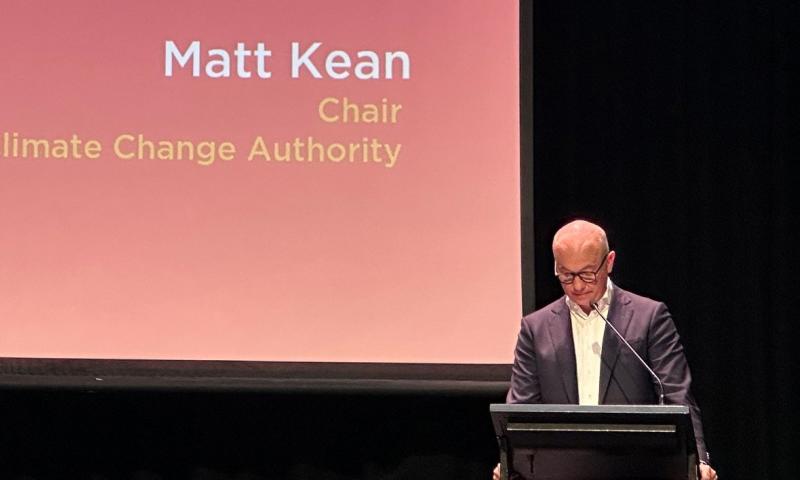
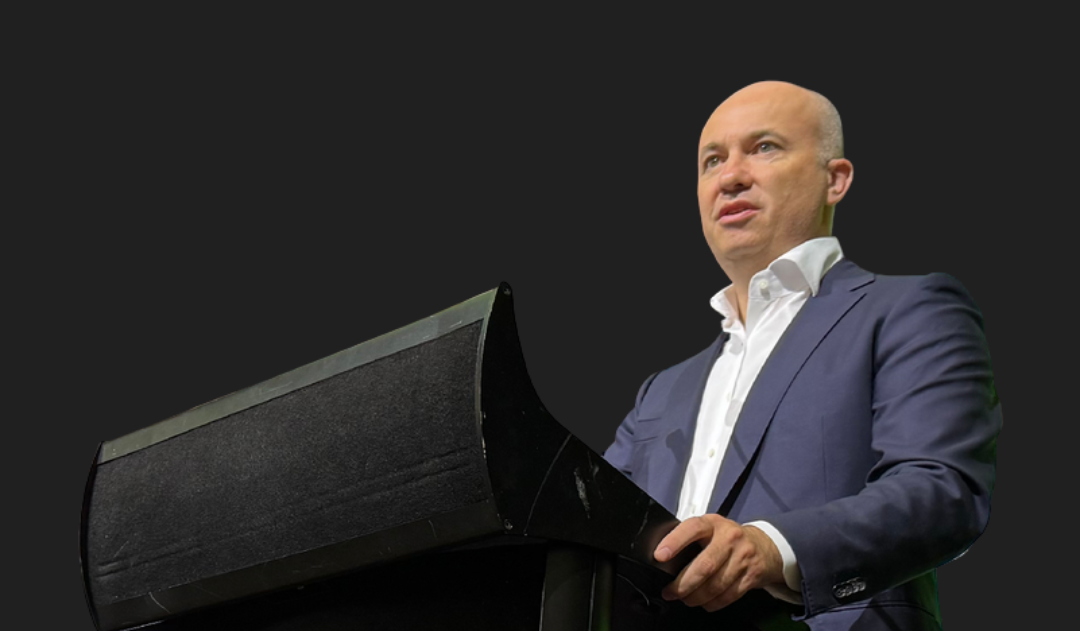
Nature Conservation Council NSW Business breakfast
The Hon. Matt Kean
Chair - Climate Change Authority
Check against delivery.
May I begin by acknowledging the traditional owners of the land where we meet today, the Gadigal people of the Eora Nation.
I’d like to pay my respects to elders, past, present and emerging and especially to any who might be here today.
It’s a pleasure to back here today – can it really be 5-years since the last shared appearance at an NCC Business breakfast?
Back then I was the Energy and Environment Minister for this state, and Minister Bowen held the shadow portfolio of Climate Change and Energy… one of us has lost more hair than the other.
Some things haven’t changed much. Back then, I spoke of “green becoming mainstream”, with growing pressure on business to demonstrate a “credible path to lower emissions”.
I nominated the delivery of cheap, clean energy into the supply chain for every business in NSW as “an urgent priority”.
Sounds familiar? Those comments were true 5 years ago – and given the fact we have had the 3 hottest ever years – 2024, which was ahead of 2023 and last year – the climate urgency is just as great, if not greater.
Now I could steal some of the Minister’s thunder by detailing the records being set in renewable energy and storage that are evidence of the building momentum – but that would be a tad ungracious on my part.
In any case, businesses are increasingly required to disclose their climate-related risks and opportunities, as they should.
We already have firms that meet at least 2 of the following criteria: more than 500 employees, and gross assets of more than $1 billion or annual revenue exceeding $500 million making such disclosures. And from this July, those thresholds will drop by about half.
There is some onus on all of us to consider what we’re doing to reduce our carbon emissions for the sake of our children and the glorious Australian environment we’re so lucky to enjoy. But the good news is that we already have access to a range of technologies that enable us to lower pollution while also cutting costs.
As consumers, an array of devices from heat pumps to solar panels to electric vehicles provide clean ways to power our lives. The same is true for many business processes too, giving owners greater control than ever before over how they source and use energy.
Sometimes, there’s a need for governments to nudge businesses and investors to act. At other times, policymakers can make the space or reinforce the signals that markets need for capital to move.
Those signals include setting clear emissions reduction goals, which Australia now has, in the form of our targets for 2030 and 2035, on the way to net zero by 2050. The Climate Change Authority last year provided the advice for those 2035 targets: to cut 2005-level emissions by 62-70%. And I can report that the Government graciously accepted it.
As energy and environment minister here in NSW I was fortunate to have willing collaborators across the political aisle when it came to some of the biggest energy and climate debates. I’m pleased to observe that 5 years on, most of those policies remain in place even though the state government changed hands (not the result I wanted, mind you!).
Now, the Authority is apolitical, so I won’t comment on the contrasting circumstances facing Minister Bowen. Yet more thunder I’ve left unplundered for him!
What I will say, though, is that the lack of bipartisan support for big matters such as climate action is regrettable.
Could we have responded to big challenges, such as fighting world wars or even COVID-19, as effectively if one or more large party in opposition had actively opposed such action?
The same goes for the decarbonisation of our economy, and that of the world’s.
We have an acute interest in the success of this transition…including the businesses represented here today…with Australia particularly exposed both to the downside risks of a hotter planet AND the upside opportunities with our abundant renewable and mineral resources. If we get this right.
Let’s get it right!
Further reading