News

Energy security and climate action must go hand in hand

Sustainability Business LIVE speech

The Hon. Matt Kean
Chair - Climate Change Authority

Check against delivery.

May I begin by acknowledging the Wurundjeri Woi-wurrung and Bunurong peoples as the traditional owners of the lands we meet.

I’d like to pay my respects to their elders, past, present and emerging, and extend that respect to any First Nations people here with us today.

Can I thank the organisers of Sustainability Business LIVE for inviting me to this remarkable event.

Thanks, too, to Matt Bell for the kind introduction.

I’m really looking forward to hearing Matt’s keynote speech and afterwards, joining him and fellow panellists. So, let’s dive in!

Most of us here don’t need a refresher course on climate change:

  • We know the heat-trapping gases in our atmosphere are rising by the year.
  • We know that means the Earth’s heat imbalance is at record levels.
  • We know our planet warmed at about a third of a degree in the years since 2014. That’s about twice the pace of previous decades.
  • And weather agencies are bracing for an El Nino event forming in the Pacific in coming months and it might be a “super” one but not in a good way.
  • Indeed, our neighbours and friends in the Pacific will be on the frontlines, too, of El Nino extremes. Quite possibly around the time of the pre-COP gathering in Fiji and Tuvalu.

Australia, with our variable rainfall, and exposure to heatwaves, is particularly exposed among developed nations to a hotter world – although western Europeans in recent days might have argued the toss on that one.

Still, we have much cause for optimism, after all, Australia has amazing renewable energy resources above, and a proverbial periodic table of minerals beneath our feet.

We owe it to our entrepreneurial spirits – and our survival ones – that we triumph in this transition off fossil fuels.

It’s a transition that’s very much in our national and international interests.

The compulsion to act was powerful enough before the Iran War broke out three months ago AND it’s even more compelling now.

The scramble for fossil fuels to replace those stuck on the other side of the Strait of Hormuz has reached almost all corners of the globe.

Nobody will forget this fossil energy crisis soon.

Not the farmers who’ve wondered if they’d have fuel and fertilisers for their next crop.

Not the motorists who’ve driven past empty service stations, or gasped at the price per litre, shown in glowering pink neon.

Not the holidaymakers forced to cancel travel plans or hunt for more costly alternative routes.

Some opportunists, of course, have sought to use these months of energy uncertainty to argue we should ditch our Net Zero emissions targets.

That’s not just counter-intuitive, it’s counter-productive.

The answer is not to expand our exposure to sources that undermine our energy – and climate – security.

After all, we can tap abundant clean energy. Resources that are here, now, and poised to become cheaper in the future.

I was recently in Singapore to represent the Climate Change Authority at the Ecosperity conference.

As you would guess, attendees were tracking developments in the Middle East, and discussing the security of vital fuel deliveries.

But they were also paying close attention to opportunities to minimise that exposure.

Home-sourced electrons look increasingly attractive compared with imported molecules and no wonder.

But don’t just take it from me, ask the International Energy Agency.

Last week, the IEA released its World Energy Investment 2026 report, one that reinforced many of the signals I picked up in Southeast Asia.

In truth, the overall picture remains similar.

The ratio of investment supporting low-carbon energy versus the fossil variety, is broadly the same as previous years: two to one.

That’s right, out of the $US 3.4 trillion – or $4.75 trillion in our money – the IEA predicts will be invested in energy in 2026, almost two-thirds will be going to low carbon-related investments.

The remaining sum, just over a third, will be invested in oil, gas or coal, the IEA says.

That ratio is holding up despite the US under President Trump favouring fossil fuels over clean ones.

His memo apparently didn’t reach Texas, where spending on solar and storage has soared in recent years, despite it being a so-called red state.

Indeed, globally, when it comes to a share of power generation investment, renewables account for 70% of the total, the IEA says.

If the spending on renewables is down in absolute terms, that’s partly because you get more solar PV and batteries for the same buck, rupee, euro or Aussie dollar, year into year.

The longer there’s uncertainty about energy from the Middle East, the more the scales tip in favour of renewables.

For example, take the Philippines, which declared a national emergency in March.

This nation, with four times Australia’s population and heavily reliant on fossil fuel imports, tripled its imports of solar panels in the first quarter of 2026, from a year ago.

It’s now the largest destination among developing nations for Chinese-made solar PV, the IEA says.

But what about fossil fuels?

Yes, there are stirrings of extra investment, including some nations lifting spending on coal to counter the on-going risk of disrupted oil and gas supplies.

But the IEA reckons that investors have to hedge their fossil bets.

How long will the oil price spike last?

And can demand for fossil fuels return to previous levels if more and more consumers are turning to electric vehicles, heatpumps, and more?

Not helping fossils is a global backlog of gas turbine supplies, while an offshore oil rig can take five years to build.

And fossil fuels have the handicap of being finite.

Contrast with the sun that reliably returns each morning – even in Melbourne!

The wind will also remain renewable so long as we have an atmosphere, a sun, and an Earth that spins.

And yet, there are some who would argue the answer to a fossil fuel crisis is to double down and try to extract more oil and gas here in Australia.

That tale needs a reality check.

Sure, my own state, NSW, has lately slashed the cost of a gas exploration licence to just $1000, from $50,000.

But when I was a Coalition government there, we were actively buying back exploration licences, particularly for coal seam gas, but also for coal mining, such as on the Liverpool Plains.

The economics of these projects weren’t great, nor were the environmental outcomes.

Fast forward to last week and you may have heard that Santos, the largest investor in gas in NSW, is anything but gung-ho about the prospects.

Santos said it was limiting new spending on a range of projects, including the Narrabri coal seam gas project in the state’s north.

Narrabri has already cost Santos at least $1.5 billion since 2010 and who knows when or whether the project will ever produce gas in volume.

The company also said it would also limit spending on its prospects in the Taroom Basin, in Queensland.

Those with long memories – or a few minutes to search Trove – would note we have been around this block before.

Back in the 1980s, in the wake of the First Iran Energy shock, parts of the Taroom Basin were touted as a major source of crude oil.

Trove tells us that an oil plant in the Taroom would have cost a $4.3 billion back then – or more than $21 billion in today’s dollars.

And developers said a plant would take possibly eight years to get to production.

As far as “drill, baby, drill” options go, this one looks like a long and expensive shot.

Elsewhere in Australia, the prospects don’t look so great either.

The AFR just on Monday noted how US oil giant Chevron views developing Australian reserves as costly versus other locations.

How about a new coal-fired power station, as some fans of fossils call for?

Well, the last coal plant to secure an investment in the National electricity market commitment was way back in 2004, in Queensland.

Some argue new coal plants are handicapped by National Electricity Objectives that require developers consider sustainability along with reliability and affordability.

Trouble is, that emissions requirement was only formally included in the objectives in 2023, so you can’t blame that addition for the decades-long drought in coal investments.

In any case, big commercial generators have shown no interest in new coal plants.

Perhaps they’ve read CSIRO’s GenCost reports that routinely find solar and wind the cheapest new sources of electricity generation.

Or perhaps they accept the numbers run up by Bloomberg New Energy Finance (BNEF).

In January, the BNEF calculated the levelised cost of electricity from a new solar project was $A68 per megawatt-hour, and for wind, it was $A115 for the same hour of power.

For new coal, the cost was $297 per megawatt-hour and that Bloomberg estimate didn’t account for any cost of carbon from burning the black stuff.

One final word on fossils, people hoping for the world to return to pre-February norms might be disappointed.

True, petrol prices have lately eased a bit, but diesel remains elevated.

But, at the end of June, the halving of the excise ends.

Unless there’s an extension, the prices you see at the servo will have 32 cents a litre added back on.

It’s little wonder consumers who might have been hesitant about buying an electric car are flocking to showrooms, here and elsewhere.

The sticker price of a new EV might be a year or two away from parity with a petrol or diesel model. As for the cost of operating an EV, well, that race is already won.

True, EV owners might still watch their apps for the cost of electricity.

But if you’re one of 4.4 million households with solar panels, you have the means to do something about it.

Of course, it would be great if more of the remaining seven million or so Aussie homes could share some time in the sun particularly renters and those living in apartments.

Helping to make the advance of electro-tech unstoppable is the billions being spent on innovation and new products.

Take balcony solar panels, which are growing rapidly in popularity in Europe and the US.

There’s no reason why this so-called “behind the plug” option can’t take off in Australia too.

The consumer product that has gained lift-off here in the past year has been home batteries, thanks largely to the Government’s Cheaper Home Battery scheme.

Originally set up as a $2.3 billion program, the eventual cost will likely reach $8.5 billion.

As we close out year one of this program at the end of June, almost half of million homes will have installed batteries, a per-capita rush unseen anywhere in the world, the Australian Financial Review reported last weekend.

There more than a few angles to this tale.

The average home battery bought before the program started was about 10 to 12 kilowatt-hours, the Australian Financial Review reported last weekend.

Under the scheme, the average battery going in has been about 28.5 kilowatt-hour, not far shy of a tripling.

And about a quarter of those homes installing a battery in the past year have upgraded their solar PV systems too.

Those installing solar along with storage have opted for bigger systems, propelling solar PV sales to record levels.

The Australian Energy Market Operator (AEMO) doesn’t have the same visibility of how households are using all this storage, compared with the performance of utility-scale batteries.

So AEMO has been sampling behaviour and have identified some interesting early signs.

Of particular interest is how households responded to a day of record heat and record power demand in Victoria, back on 27 January, this year.

AEMO found households with batteries transitioned to exports later in that high-demand day than solar-only households.

Presumably they were charging up their storage.

By that evening, as the sun went down and power supplies became tighter, those households with batteries reduced peak net imports from the grid by 1.4 kilowatts on average, compared with solar-only homes.

That might not sound like a lot, but AEMO reckons such actions, writ-large, would have helped the grid at a critical time.

The episode also reminds us the budget cost of battery subsidies will be partly offset by grid operators not needing to invest as much on networks and other infrastructure.

That helps all our power bills.

Of course, many households adding batteries are doing so because they want to increase their independence from energy companies, which allows me to segue to my final point that I’d like to leave you with.

It’s a subject we might pick up with the panel a bit later on, too.

The Cheaper Home Battery program will add at least 12 gigawatt-hours of storage capacity in its first year.

That’s an enormous amount of electrons.

And when more EVs come with bi-directional charging, we will other source of storage, remember that a typical EV packs 60 kilowatt-hours or more.

What more can regulators, governments and companies do to encourage households to export their surplus electrons?

On a regular day, such exports would further reduce the need to burn expensive gas, lowering the wholesale power bills for everybody.

And on a day of extremely high demand for electricity, such orchestration could keep the lights on and the induction cookers cooking, for everybody.

Indeed, we glimpsed a little of that potential back in January, here in Victoria.

Those with solar and storage ended up delaying their demand on the grid, compared with homes hosting solar panels only.

That episode was voluntary but uncoordinated.

Imagine if well-designed agreements between households with ample storage and their retailers provided rewards for delaying demand on the grid, or even prompted exports?

The benefits to the grid – and to battery owners – would be amplified and we’d likely burn less gas and coal, and hence, cut emissions.

That’s a win-win-squared outcome!

We often hear the future is what we make it well, let’s get on with the making!

Thanks for listening!

You may also be interested in:

 Man overlooking dead trees in lake Menindee in a sunny day, outback Australia
The Authority heard calls for clearer ACCU methods, stronger integrity, First Nations leadership and stable signals to support emissions goals.

Infrastructure is the blueprint for Australia’s net zero and climate-resilient future

Infrastructure Sustainability Council Connect Conference speech

The Hon. Matt Kean
Chair - Climate Change Authority

Check against delivery.

May I begin by acknowledging the Jagera people and the Turrbal people as the Traditional Custodians of Meanjin, whose lands we meet on today.

I’d like to pay my respects to elders, past, present and emerging, and extend that respect to any First Nations people here with us today.

And thank you to the Infrastructure Sustainability Council for inviting me to return, having addressed this Conference previously.

I trust that it means that I made a good first impression!

Infrastructure is often talked about as a pipeline of projects. But it’s really more like a blueprint for how our economy runs, how our communities function, and, increasingly, how resilient we are in a changing climate.

And like any blueprint – the decisions we lock in at the design stage determine what gets built and what we’re left living with for decades.

It was soon after I’d stepped into the role as Chair that the Climate Change Authority released its Sector Pathways Review.

As I said at the time, if infrastructure is the blueprint, then decarbonising it is fundamental in helping Australia meet its emissions reduction targets, ensuring our economy remains productive and competitive, and helping our communities to become more resilient to the risks we can already see.

And just to be clear, we weren’t contemplating future possibilities.

We were focused on the here and now.

Once the blueprint is set, decisions lock in emissions, costs and risks for decades.

That’s because we’re often delivering long-life assets or networks that will shape and determine outcomes for the next 30 or 40 years, or sometimes more.

I’m particularly proud that some of the policy thinking in this space commenced during my time as Treasurer, Minister for Energy and Minister for Climate Change in the NSW Government.

As a state with a pioneering infrastructure pipeline valued at over $110 billion at the time, the scale of the opportunity was enormous.

Changing how NSW procured and built infrastructure helped drive down emissions.

So we looked at it from every angle – measurement, design, materials, transparency and procurement – to drive down embodied carbon.

It gave us a comprehensive plan to reduce emissions across all stages of a project - construction, operations and end-of-life waste disposal.

It sent clear signals to the market and supply chains.

And we’re already seeing what that looks like in practice. On projects like Sydney Metro, carbon targets are now built directly into procurement, helping to drive around a 20% reduction in construction emissions compared to business-as-usual, through things like low carbon concrete, recycled materials and smarter design.

And on WestConnex, more than 98% of construction waste was recycled with concrete mixes incorporating lower carbon alternatives and more than 30,000 tonnes of waste materials reused from other industries.

Now, the current NSW Government has updated its Decarbonising Infrastructure Roadmap.

That’s a good thing, as we can never adopt a set-and-forget mindset.

But what excites me is seeing the wave of activity that has since taken place across the nation to build a contemporary toolkit.

And so much of it is about driving systemic change because we need to go beyond viewing infrastructure as a collection of projects.

A rail line here.

A road over there.

A water treatment plant somewhere else.

That’s not how the system works.

Energy, transport, water, communications—they are all part of a broader system that shapes how our economy functions.

That’s not just a collection of assets – it’s the system-level blueprint.

And if we want to decarbonise effectively, we need to act at that system-wide level.

The good news is that the evidence base and policy pathways for decarbonising infrastructure are growing.

For example, as of 2024, Australia has an agreed and consistent method of measuring embodied carbon in infrastructure.

The Technical Guidance has been agreed to by all jurisdictions.

It means infrastructure delivery agencies, their advisors, delivery partners and investors are working from the same standards and assumptions.

It means everyone is working from the same assumptions – improving business cases, reporting, and policy.

But even the best blueprint isn’t fit for purpose if it doesn’t account for the conditions it’s built for.

Effective adaptation and resilience are as much of a litmus test for policymakers. In effect, we’re having to revisit the assumptions in that blueprint.

Every dollar invested in climate adaptation can save up to $11 in recovery costs.

And the effects of a changing climate through more intense bushfires, floods and rising sea levels, are already upon us.

The National Climate Risk Assessment tells us the impact will be felt on lives and livelihoods.

For example, it identified that telecommunications assets are at high risk from increasingly severe and extreme climate hazards – especially in coastal areas.

The increasing incidence of extreme heat events will result in temperatures outside safe operating levels for energy infrastructure, forcing operators to increase outages through load shedding.

We’ve already seen how quickly that plays out. During the 2024 heatwaves, extreme demand and system stress have left more than 100,000 homes and businesses without power.

And when the system reaches its limits, operators have no choice but to step in and switch off parts of the grid to prevent a broader collapse.

Infrastructure Victoria also offered compelling insights in its report “Weathering the Storm: Adapting Victoria’s infrastructure to climate change”.

It identified that climate change could cost the State nearly $1 trillion by 2100 if it doesn’t act to reduce emissions and adapt its infrastructure.

As the report said:

“The benefits of investing in resilient infrastructure can outweigh the costs of repairing and rebuilding it after extreme weather events.”

The report made the important point that the State should manage the financial risks of climate change by including climate adaptation and resilience in its long-term financial management objectives for infrastructure.

This will help make the financial costs of climate change explicit, drive action and reforms, and allocate resources where they are needed most.

The Climate Change Authority also considered the risks to the homes we live in in last year’s landmark report “Home Safe: National leadership in adapting to a changing climate.”

Bushfires, cyclones and floods are already costing Australian homeowners more than $4 billion a year in cleanup and recovery costs.

There are already over 650,000 properties around Australia considered at high risk from one or more climate hazards.

That renders insurance either unaffordable or unavailable for many.

And over 3 million homes are projected to be exposed to some level of riverine flooding in the next 5 years.

In response, the report makes the case for fit-for-purpose standards, laws and regulations to prepare Australia for current and emerging risks.

The National Construction Code already sets minimum construction standards for new buildings and certain work on existing buildings, such as alterations or extensions.

But the Authority suggested that aligning its requirements with projected climate impacts could help make homes more resilient.

A simple case in point.

In recent years, both Cyclone Alfred and Cyclone Seroja threatened stretches of the Queensland and Western Australian coasts.

Their trajectory went well beyond the “cyclonic regions” defined in the Code, beyond where it currently requires buildings to withstand cyclone-strength winds.

So we need to consider how to adapt the Code to ensure more homes are built to withstand cyclones where they may hit in the future.

We should also empower Australians to make informed choices about reducing climate risks by giving them more information and resources.

It’ll help them decide where to buy or build a new home, whether to rebuild or relocate after a climate-related disaster, and what steps to take to reduce the physical risks of their home.

Now, for all the progress we’ve made in recent years, it’s by no means mission accomplished.

One of the observations the Authority made in our most recent Annual Progress Report was that governments need to get better at what they don’t always do well, and that’s coordinate on implementation.

Because even the best blueprint fails if the builders aren’t working to the same plan.

There is currently a commitment to develop a clear action agenda by the end of 2026 to embed adaptation across government and implement the priorities set out in the Government’s National Adaptation Plan.

The National Adaptation Plan expresses that nationally agreed principles for incorporating hazard and climate risk considerations in land use decisions at all levels is a key priority.

Successful implementation is going to require federal, state, territory and local governments to work in concert.

To focus efforts, the Authority has recommended legislating for the National Climate Risk Assessment to be undertaken every 5 years, and the National Adaptation Plan refreshed on the same cycle, at a minimum.

Climate risk information and data needs to be better coordinated and more consistent across jurisdictions.

Given the bulk of planning and land use decisions fall at the feet of state, territory and local governments, they need to be armed with the right information.

It builds on a theme we identified back in the 2024 Sector Pathways Review, which highlighted that slow and complex approval processes are a barrier to investment in major transition projects.

Delays in approvals and transmission delivery can increase project risk and raise the cost of capital.

Which is why the Authority has also placed a spotlight on the need for better coordination and financial support to de-risk investment for common user infrastructure.

There’s the chicken and egg dilemma.

Investors in electricity transmission, pipelines, ports and other assets need sufficient certainty that customer demand exists.

But customers want to know the infrastructure will be there, costs will not be prohibitive and that other barriers will be eliminated.

There’s no single solution, as the right financial instrument will depend on the risk and return profiles of both investors and taxpayers.

As Australia works towards $122 billion in investment by 2050 to fulfil the Government’s net zero ambitions, we will need to keep identifying and refining the models that appeal to institutional capital.

Co-funding vehicles through the Future Made in Australia policy, ARENA, the Clean Energy Finance Corporation and the Capacity Investment Scheme offer a clear path forward.

It reinforces how far and fast infrastructure has come as a sector in driving decarbonisation, both at a project and economy-wide level.

Policy practices that simply didn’t exist 5 years ago have become entrenched.

Governments and industry are working together to learn from what is working and what needs to be done next.

So if infrastructure is the blueprint for our future, the task ahead is clear:

  • We need to design it deliberately.
  • We need to build in a way that cuts emissions and strengthens resilience at the same time.
  • And we need to make sure governments, industry and investors are working to the same plan.

Because the question isn’t whether we live with the consequences of today’s decisions.

It’s whether we’ve designed the right blueprint in the first place.

And I’m confident this sector can deliver it.

[ENDS.]

You may also be interested in:

Matt Kean Singapore High Commission
In this keynote address, The Hon. Matt Kean highlights the immense opportunity and urgency of financing Southeast Asia’s clean energy transition. He emphasises…
  • News
  • Opinion article
Matt Kean Singapore High Commission
In this keynote address, The Hon. Matt Kean highlights the immense opportunity and urgency of financing Southeast Asia’s clean energy transition. He emphasises…
  • News
  • Opinion article

Australia’s energy transition accelerates toward a cleaner, safer grid

Australia-Israel Chamber of Commerce boardroom lunch keynote speech

The Hon. Matt Kean
Chair - Climate Change Authority

Check against delivery.

May I begin by acknowledging the Gadigal people of the Eora Nation as the traditional owners of the lands we meet on today, and pay my respects to their elders, past and present.

Thank you, Chris Flynn, for that warm introduction, and to Michelle Blum and other members of the Australia-Israel Chamber of Commerce for the kind invitation to address you today.

I can’t believe it’s almost nine years since I led an NSW delegation to Israel, as the Minister for Innovation and Better Regulation.

That visit left me with many fond memories, not least Israel’s renowned prowess at fostering start-ups, and turning them into commercial successes.

I’ve been asked to speak today about how Australia can secure a low-carbon grid, including how Australia’s energy infrastructure can be protected in the digital era and provide a broader perspective on climate policy.

I should note at the outset that energy market authorities are rightly monitoring the evolution of cyber, data and technology threats to our energy infrastructure.

Those developments, though, are not an area of focus for the advice we provide to the government on climate policy.

Having attended Senate Estimates just last week, I think it would be wiser for me to direct any questions on that subject to more expert agencies.

That approach doesn’t necessarily placate the politicians but they do tend to move on to the next subject quickly!

In any case, there is more than enough material about the energy transformation to consider; how it’s under way and gathering pace.

I’ll be covering a bit of ground today, from exploring the growing threats from climate change, to the synergies between climate security and energy security.

Then I’ll detail how new tech is helping to fortify the grid, and touch on how electric vehicles could help too.

The main takeaway is the energy market is dynamic and exciting, and generating a wealth of opportunities for nimble and entrepreneurial companies.

We’re seeing how households – and many companies, too – are taking more control of how they generate or source their energy, how they might store it and, even how they can turn a profit by feeding power back into the grid.

Before I dive deeper into the changes, can I just note the recent promising moves on the electricity price front.

The Australian Energy Regulator, and its equivalent in Victoria, the Essential Services Commission, cut the default offers for most residential and all small businesses in the key population regions of eastern Australia.

The biggest falls will be in the order of 11.3% for the coming 2026-27 year.

Extra renewable energy and storage were cited by the regulators as key drivers in the lower default offers.

It’s important to acknowledge falls in prices because the public understandably tends to pay a lot more heed to prices when they rise.

Regulators, of course, do much more than set prices when it comes to the power grid.

As I will sketch out shortly, the grid is becoming much more dynamic, and it’s no small achievement for our market designers and operators to keep up with the changes.

The near-term power price drop is one sign that the transition towards a low-carbon grid is picking up pace.

And if we can decarbonise the power sector, the potential for the electrification of almost everything else can really help Australia make headway towards our legislated climate goals for 2030 and 2050. 

In between sits the country’s 2035 emissions reduction goal, which the CCA advised the Government on last year and I’m glad to say they accepted our advice.

Our role is to give advice on climate adaptation to the changes already in train, and how we can curb emissions to minimise future disruption.

Or, to put it bluntly, we must manage the unavoidable while striving to avoid the unmanageable.

It’s easy to forget the reasons for climate action when the daily news flow so thoroughly crowds out our attention on longer-terms matters.

But until atmospheric levels of greenhouse gases stabilise, we will continue to trap ever more heat from the sun in our atmosphere, oceans and on land.

That shows up as the Earth’s energy imbalance, which keeps rising and is at a record high, the World Meteorological Organization, or WMO, reported recently.

The past 3 years were the hottest 3 years on record, globally.

Should an El Nino event develop in the Pacific in coming months, as seems likely, this year and next will almost certainly feature among the hottest years on record, if not setting a fresh, unwanted, high mark.

As WMO Secretary-General Celeste Saulo said in comments accompanying the body’s latest State of the Global Climate Report:

“Scientific advances have improved our understanding of the Earth’s energy imbalance and of the reality facing our planet and our climate right now.

“Human activities are increasingly disrupting the natural equilibrium, and we will live with these consequences for hundreds and thousands of years.”

Sobering words, but we must keep them in mind. For some, efforts to curb our emissions are taken as a vanity project, or a luxury. Not the necessity that they are.

Now, this audience needs no reminder that developments in the Middle East matter, which brings me to the confluence of energy and climate security.

The theme of my speech, though, would not have varied much had we been meeting 13 weeks ago, prior to the start of the Iran war.

I would have argued then that the economics were already shifting in favour of taking climate action, quite apart from other imperatives.

And that Australia - with our abundant renewable energy resources above, and our rich critical mineral resources below – is poised to benefit from decarbonisation like few others.

Since then, of course, the world has been put on notice.

The closure of the Strait of Hormuz - blocking the transit of as much as a fifth of world’s oil and gas, and as much as 30% of some key fertilisers – has exposed the risk of relying on fossil fuels in a way that climate warnings have never matched.

Even if the Strait reopens, we have a clearer picture of how such fuels don’t just undermine our climate security.

They are bad for our economic security too.

Australians, who wondered whether their local service station might be out of petrol or diesel, won’t easily forget their vulnerability to molecules shipped over long distances.

Indeed, transported from a region prone to geopolitical gyrations – as you here today will understand better than anybody.

I was recently attending an event – Ecosperity - in Singapore and can tell you other nations are looking with urgency at how they can diversify their energy sources.

Homegrown electrons were increasingly appealing before and have lately become much more so.

The technological tides lifting renewable energy, storage, heat pumps, EVs, you name it, should give us optimism.

We can secure affordable, reliable energy that literally doesn’t cost the Earth.

So, let’s turn now to the technologies that not only give us a fighting chance to deal with climate change but also help with the cost of living.

It’s well-publicised, of course, that more than 40% of Australian homes now have solar panels.

Dare I say, the Government’s Cheaper Home Battery scheme might also have garnered some publicity.

After all, some 410,000 households – and counting - have taken up the subsidy to buy home battery systems since last July.

Contrast that sum with California, for instance, a trailblazer for so many global technologies.

That state, with a population about 50% larger than Australia’s, has added 260,000 home batteries, according to Bloomberg New Energy Finance.  And that’s since the year 2020!

Other things are notable in relation to Australia’s binge on batteries.

Prior to the scheme’s start, the average size of a home battery installation was between 10 to 12 kilowatt-hours.

The Energy Department told Senate Estimates last week the average battery being purchased was 28.5 kilowatt-hours, or not far short of a tripling in size.

Something else that’s exciting is also under way.

While households have used the subsidy to bulk up on batteries, many of them have also grabbed the chance to either expand their array of solar panels, or to install bigger solar systems if they hadn’t already purchased one for their roof.

In April, solar PV sales for systems of less than 100 kilowatts in size rose to 442 megawatts in Australia, according to SunWiz.

That total was a record for any month, and almost double the level of April 2025.

We perhaps should not be surprised, since almost half of the battery installations have been accompanied by an upgraded solar PV system, or a brand - shiny - new one!

The Australian Energy Market Operator is seeking to analyse how all these batteries – plus larger solar systems – might be affecting consumer behaviour.

AEMO took a sample of 1000 households with solar PV of less than 20 kilowatts of capacity, and compared them with the same number of households that have both solar and storage.

They looked at how they behaved on 27 January, when Victoria had a record hot day AND record power demand for the state.

Despite these challenges, the state’s grid fared relatively well. AEMO was not required to issue any level of Lack of Reserve alerts in Victoria, the signal it sends to the market when it foresees potential supply strains.

AEMO’s analysis indicated that households with batteries did their bit to help – without any prompting. An “invisible switch”, if you like, rather than the “invisible hand” at work.

AEMO found households with batteries transitioned to exports later in that high-demand day than solar-only households, presumably once they had charged up their storage.

By the evening, households with batteries reduced their average peak net imports from the grid by 1.4 kilowatts, relative to solar-only homes.

That might not sound like a lot, but AEMO reckons such actions, writ-large, would have helped the grid on a day when such support would have come in handy.

Remember that AEMO is relying only on limited samples so far but the early signs are promising.

And as an aside, it’s worth noting that the solar systems in solar-battery homes in Victoria were about two-thirds larger than those in solar-only homes.

This outcome is an indication of how the battery subsidies have encouraged the take-up of larger solar systems.

And remember that the overall battery scheme has some way to go, with $7.2 billion allocated in the Budget over 4 years, and a total spend of about $8.5 billion, we heard at Estimates last week.

And with the cost of both solar and batteries expected to fall further as scale and innovation drive down production costs, these D.I.Y energy generation and storage opportunities will keep growing.

That day in January also gave us an insight into the potential if we can orchestrate those hordes of home batteries.

If we can find a way to routinely and transparently reward battery owners, we can encourage more such take-up of storage and more support for the grid when we need it.

We’ll also avoid a lot of spending on networks and other infrastructure – and smooth the path towards decarbonisation.

To ensure virtual power plants go viral, in terms of popularity, we’re going to need to understand much more about how households with lots of solar and a sizeable battery interact with the grid, and why.

There is a paradox at play. Remember, many owners of solar and batteries have bought such equipment to increase their independence from energy companies and may need some wooing to surrender some of that new-found freedom.

Australia is at the forefront of this distributed energy revolution, and if we can crack the code – not literally, mind – we'll have a business proposition to share far and wide.

The power sector, of course, has many components in flux, such as a doubling of grid-scale storage in the National Electricity Market in the 12 months to the end of March.

Interestingly, those big batteries have added about 11.2 gigawatt-hours of capacity. Almost as much as the 11.5-plus gigawatt-hours from the 400,000-plus new home batteries, over a similar timeframe.

I should add that this solar and storage story hints at another prospect of change, coming down many of our driveways- the surging sales of electric vehicles.

Globally, EV sales in 2025 made up about one-in-four new car sales, and about one-in-six in Australia. Rising petrol and diesel prices will likely turbo-charge those sales, if you’ll forgive me just one pun.

We can expect many new models to have bi-directional charging, meaning your car could help power your home or even discharge into the grid.

Remember, many EVs will pack in batteries of 60 kilowatt-hours of capacity – potentially a lot more. That amount is roughly double the average new battery being installed under the Cheaper Home Battery Scheme.

I’ve focused mostly on what’s happening on the homefront, let’s turn to another fast-changing phenomenon.

Many of you will be following the stunning rise of data centres. You might also have wondered how the grid is going to cope with such demand.

For some perspective, I note Bloomberg New Energy Finance recently estimated that EVs would account for 11% of final global electricity demand by 2050.

Data centres aren’t far behind, predicted to account for a 10% share of demand by mid-century.

But demand centres will be far more concentrated, of course, than the millions – perhaps billions – of EVs.

The data centre operators may well bring their own energy supplies with them, either in on-site generation or in power purchase agreements – like Amazon’s.

These centres could help accelerate the renewable energy transition.

Australia’s federal and state governments, with the exception of Queensland, last month [[May 8]] agreed that data centres in the NEM and the WA’s Wholesale Electricity Market should “invest in additional renewable generation and firming in their state of operation to fully offset their electricity demand and provide demand flexibility services to avoid additional costs being borne by other energy users”.

These centres should also “provide transparent reporting on their energy use and emissions production”, according to the communique by the energy and climate ministers.

Perhaps fittingly, we’re going to rely on a lot of artificial intelligence to manage all this complexity – a positive feedback loop for data centre demand, if you will!

Those same AI capabilities can also support AEMO to better manage grid reliability, and even help safeguard national energy security from cyberattacks that are as inevitable as they are unwelcome.

And, to conclude by circling back to where I started, all these developments – from new tech to having nimble firms and responsive regulators – are going to have to keep evolving.

That’s because climate change itself will provide its own challenges to grid stability.

We can expect more record heat such as we saw in January in Victoria. Next time, though, it might not arrive so conveniently on a Tuesday, one day after Australia Day, as was the case earlier this year.

A busier day, say in February, when schools and businesses are in fuller swing, might have placed more strain on Victoria’s grid, and perhaps that of neighbouring states too.

Indeed, as I noted in an opinion piece in mid-January, Victoria’s grid was lucky not to have been hit by bushfires that raged across large parts of the state earlier that month.

Fires near Albury-Wodonga, in particular, were not that far from the key electricity interconnector between Victoria and NSW.

Had there been significant damage to transmission infrastructure, the power grid might not have coped so well as it did during the record heatwave when it arrived about a fortnight later.

And so, to conclude, the power grid, as I've detailed today, is going through an historic transformation.

If we manage the changes well, we can lower our energy bills even as we become more energy independent, and our grid can become more resilient even as we endure a more punishing climate.

And, as no small side-benefit, we can leave Australia and the world a better place than we found it.

Thanks for listening, and I look forward to fielding your questions.

You may also be interested in:

Matt Kean Singapore High Commission
In this keynote address, The Hon. Matt Kean highlights the immense opportunity and urgency of financing Southeast Asia’s clean energy transition. He emphasises…
  • News
  • Opinion article
Matt Kean CEDA speaking close up
Geopolitical instability exposes the risks of oil and gas dependence, accelerating the drivers towards a clean energy future. Australia is well positioned to…
  • News
  • Opinion article

Australia and Southeast Asia: Turning climate ambition into investment action

Australian High Commission reception keynote

The Hon. Matt Kean
Chair - Climate Change Authority

Check against delivery.

Good evening to the High Commissioner, Robyn Mudie. Thank you for hosting us so warmly, and so soon after taking up this vital role. To Rachel Kyte, the UK’s Special Representative on Climate, and to all our friends old and new — it’s a real pleasure to be back in this beautiful city for Ecosperity 2026.

The ties between Australia and Singapore — and with the region more broadly — are uncommonly close, and getting closer. Australia was the first dialogue partner of ASEAN back in 1974, and we’ve had a Comprehensive Strategic Partnership since last year. But grand titles don’t do justice to the enduring warmth between our nations. The truth is simpler: we are neighbours, we are partners, and we are in this together.

The scale of the opportunity

Let me be direct about what we’re dealing with.

The region is one of the world’s fastest-growing economies. But it also faces an enormous investment task.

Australian government analysis estimates the region needs around AUD3 trillion in infrastructure investment — and a similar scale again for the green transition. Bloomberg projects 9 gigawatts of new solar capacity to be added across Southeast Asia this year alone — two-thirds more than in 2025. Over the coming decade, cumulative solar deployment is expected to reach 133 gigawatts, requiring around AUD123 billion in investment. And that’s before you count the batteries.

The capital exists. The question is whether we can get it to flow in the right direction, at the right speed.

The challenge of mobilising private capital

Public budgets — even generous ones — will never close a gap of this scale alone. We need private capital. And the honest truth is that for too long, we’ve talked about mobilising private capital without doing the hard structural work to make it happen.

Blended finance has been around for decades. And yet volumes remain stubbornly small relative to the need. Why? Because risk is real. Regulatory environments can be uncertain. Currency exposure is significant. And for too many private investors, the returns still don’t justify the complexity.

If we want to change that, we need to be more honest about what it takes — and more willing to put public capital to work in ways that genuinely move the needle.

What Australia brings

The Australian Government has been doing some serious thinking, and some serious doing.

Through DFAT, through the Clean Energy Finance Corporation, and through our engagement in multilateral forums, we’ve been building the architecture that makes Australian capital and Australian expertise available to the region. Our Green Economy Agreement with Singapore, signed in 2022, explores opportunities across 7 areas — from trade and investment to green and transition finance. That’s now part of a wider strategic partnership.

We’re leading the COP31 negotiations in Türkiye later this year. Targeted decarbonisation deals – focusing on key industries and supply chains – are expected to feature prominently, and more are in the works beyond those already signed.

And we’re not just talking about finance flows – we’re talking about a genuine partnership built on shared knowledge. When our CSIRO works with Malaysian partners on battery performance in tropical heat and humidity, we’re learning things that matter for our own north as much as for the region. About 40% of Australia’s landmass lies in the tropics. We have more tropical land than any country except Brazil, the DRC, and Indonesia. This region’s challenges are our challenges, too.

A practical ask for this room

Which brings me to you.

The reason evenings like this matter isn’t the speeches — it’s the conversations that follow. The introductions that become partnerships. The deal that gets done because 2 people who needed to meet, finally did.

So let me make a practical ask, depending on where you sit.

If you are on the public side — in development finance, government, or a multilateral institution — I want to ask you to think about how you use your balance sheet more boldly. Concessional capital is most powerful when it attracts others, not crowds them out. The question isn’t “what is the minimum we need to put in?” — it’s “what structure makes this compelling for private capital?”

If you are on the private side — in fund management, institutional investment, or corporate treasury — I want to ask you to be genuinely honest about what you need to move. Not as a negotiating position, but as a design brief. We cannot build instruments that work if we don’t know what the real barriers are.

And if you are on the philanthropic side — in foundations, family offices, or impact-first vehicles — I want to ask you to think about your role as first-loss capital. The most powerful thing philanthropy can do right now is not fund the solution directly, but take the first tranche of risk that makes the commercial solution possible.

That is the architecture of blended finance when it works. And it works.

The urgency

I want to say something plainly about timing.

Yes, the conflict in the Middle East has created real turbulence. Vietnam sourced 95% of its crude oil from the Persian Gulf before this latest outbreak of hostilities. The Philippines, 88%. Short-term investment in fossil fuel security is a reality we have to acknowledge.

But here’s what else is true: Vietnam has been Southeast Asia’s biggest EV market for 2 years running. The Philippines has led the region in renewable energy investment since 2022. The longer oil prices stay elevated, the smaller the premium for clean alternatives — and the more compelling the investment case becomes.

The conflict hasn’t weakened the case for the transition. It has strengthened it, and added urgency.

We are 4 years out from 2030 — the deadline the world has set itself for bending the emissions curve. The investments that will determine whether we hit that target are not being made in 2030. They are being made now. This year. This week.

The deals we don’t do, the structures we don’t build, the partnerships we don’t form this year — those are not deferrals. They are emissions that will enter the atmosphere regardless of what we promise later.

Closing

Australia is a serious partner for this region. We bring capital, we bring credibility, and we bring a genuine commitment to Southeast Asia’s future — not as a donor, but as a partner.

With at least AUD225 billion in bilateral investment flows between Singapore and Australia alone, we know each other’s legal and regulatory landscapes well. That creates real scope to combine public, private, and philanthropic capital across a range of asset classes — not just in our own markets, but in those of our neighbours.

In conclusion — if I may lean into a little local colour — don’t be afraid to be a little kiasu tonight. The opportunities are real, they are urgent, and the future, I am genuinely confident, can be really shiok.

Make the most of the next 2 hours. Thank you.

You may also be interested in:

Matt Kean CEDA speaking close up
Geopolitical instability exposes the risks of oil and gas dependence, accelerating the drivers towards a clean energy future. Australia is well positioned to…
  • News
  • Opinion article
Scarlet macaws flying over valley
Our weekly newsletter, packed with climate change news and updates on the Authority’s work.
  • News
  • On Good Authority
man planting a young tree
Advice from the Climate Change Authority to the COP31 President of Negotiations
  • Reports and Reviews

On Good Authority - 20 May 2026

Welcome to a new edition of On Good Authority. This fortnight, we take a closer look at global methane figures from the International Energy Agency, which point to gaps between policy commitments and implementation. There’s also mixed news about deforestation and climate change, including reducing the resilience of key forest systems like The Amazon.

Our feature focuses on the 2026 Budget outcomes for energy, fuel security, and supply.

For further news and updates please follow us on Facebook(Opens in a new tab/window), Instagram(Opens in a new tab/window) and LinkedIn(Opens in a new tab/window).

Authority news

In his most recent opinion article, our Chair, the Hon. Matt Kean, writes about how geopolitical instability exposes the risks of oil and gas dependence, accelerating the drivers towards a clean energy future. To read it and his other latest speeches please, visit the news section of our website.

Our 2026 Stakeholder pulse survey(Opens in a new tab/window) is currently open and we invite your participation. We want to know what you think about your engagement experience, as part of our commitment to improving over time. The survey closes 11pm, 5 June 2026.

You may also be interested in:

China solar panels and wind turbines
Our weekly newsletter, packed with climate change news and updates on the Authority’s work.
  • News
  • On Good Authority
Women holding gum tree seedlings
The Authority is preparing its fifth review of the ACCU Scheme and will provide a report to the Minister by the end of 2026.
  • ACCU review
Matt Kean CEDA speaking close up
Geopolitical instability exposes the risks of oil and gas dependence, accelerating the drivers towards a clean energy future. Australia is well positioned to…
  • News
  • Opinion article

Energy security shock exposes the risks of oil and gas dependence, accelerating the drivers for a clean energy future

Check against published version. Published in Australian Financial Review(Opens in a new tab/window) on 12 May 2026.

Decarbonisation progress 

The Hon. Matt Kean 
Chair - Climate Change Authority 

Fatih Birol, executive director of the International Energy Agency, is surely right when he recently declared global perceptions(Opens in a new tab/window) of the risk and reliability of fossil fuels would alter because of the unresolved Middle East war.

Nobody can yet say how long it will take to unblock the Strait of Hormuz, through which about a fifth of the world’s oil and fossil gas transits in peace time. Nor can we tell how much more damage will be done to the region’s energy production and port capacity before the conflict formally ends.

But, as I told the Committee for Economic Development of Australia’s recent climate and energy summit, the shift off fossil fuels was already well underway before the latest shots were fired. And it will continue – with renewed gusto – well after the guns fall silent and drones stay grounded.

That transition remains very much in Australia’s interest, and not just because the climate imperatives for action haven’t disappeared amid the geopolitical gyrations. (A looming El Nino event might serve as a reminder.)

With our abundant renewable energy resources above and almost all the necessary critical materials under the ground, Australia is in pole position to win in a decarbonising world.
Cues to exit fossil fuels were already being taken by Australia’s families, farmers, businesses well ahead of this latest Middle East mayhem.

Indeed, we had a global rehearsal of this disruptive threat in 2022 when Moscow’s illegal invasion of Ukraine triggered a scramble to substitute energy supplies from Russia as trade sanctions were rightly applied.

Electric car sales, which had been motoring along well with a 9 percent share of the global market in 2021, hit the accelerator to reach about a quarter-share at the end of last year. Electric buses alone claimed a 43 percent market slice, according to Bloomberg New Energy Finance.

In fact, worldwide sales of cars with petrol- or diesel-powered engines have been on the skids since 2017. They are now down by roughly a quarter from their peak, Bloomberg says. This latest crisis will make a hard sell even harder at car yards, near and far.

Indeed, one in six new vehicles sold in Australia in April was an EV(Opens in a new tab/window), with 110 EV models available. Including pure hybrids and plug-in hybrids, the share of non-conventional new cars was just shy of half the total market(Opens in a new tab/window).

Australians, of course, have enjoyed deck-chair seats in a lot of this global transition. More than 40 percent of our households can glance up with some pride at the solar panels on our roofs, a world-leading proportion.

That more than 380,000 homes have bought batteries - 10.7 gigawatt-hours' worth - since the government’s battery subsidy program began in July further burnishes our DIY energy generation and storage credentials. One-tenth of global battery capacity has lately been taken up by Aussies(Opens in a new tab/window).

The inherent inefficiency of fossil-powered engines – including the turbines in our power stations – has created a physical vacuum that “clean energy everything” is now starting to fill.

From heat pumps to hydrogen, and biodiesel to sustainable aviation fuel, the competitive scales of fossil-fuel alternatives were already tilting before the war raised the spectre of supply shortages and sent prices skyward.

Some, of course, have sought to capitalise on the chaos, calling for more gas and oilfields, and new refineries underwritten by governments.

The timeline for such projects, though, would be counted in years – perhaps a decade. Should they ever materialise, their likely high development costs would mean consumers could expect little in the way of energy price relief.

By then, the technology propelling electrification – including ever-more efficient solar panels and cheaper batteries – will have dimmed the appeal of fossil fuels yet further.

For governments, the priority should be to smooth the transition with clear, consistent, well-explained policies that help communities adjust.

The popular calculus of risk, though, has shifted - and that’s one genie that can’t be rebottled.

You may also be interested in:

Matt Kean at a podium delivering a speech
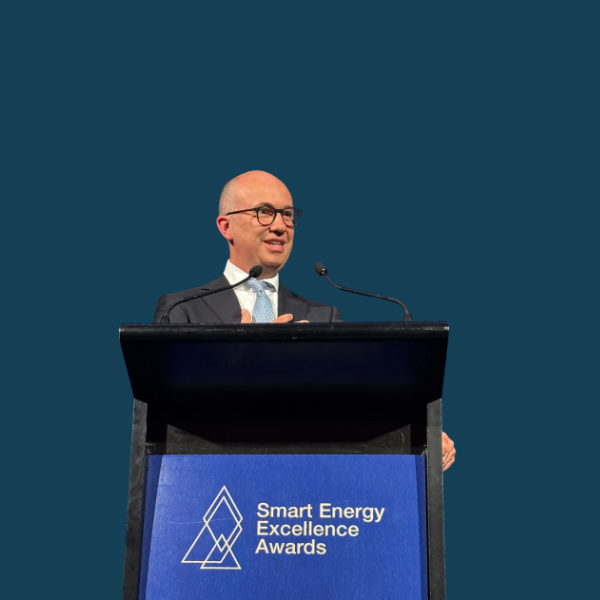
At the Smart Energy Awards, Authority Chair Matt Kean honours leaders and John Grimes and discusses how solar and batteries are shaping a cleaner future.
  • News
  • Speeches
Matt Kean sitting on a chair with a solid dark blue background
Authority Chair Matt Keen urges the electrification of efficient buildings to cut costs, improve health, and strengthen energy security.
  • News
  • Speeches
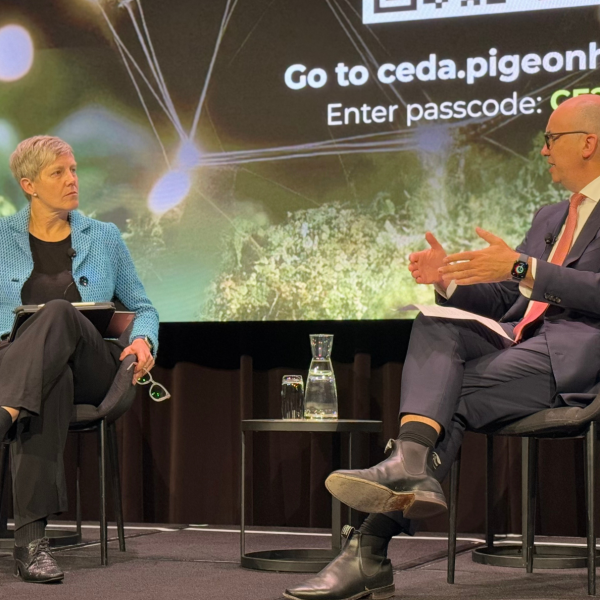
Matt Kean speaking with CEDA CEO
During the CEDA Climate and Energy Summit, Climate Change Authority Chair Matt Kean outlined Australia’s climate and energy outlook, highlighting observed…
  • News
  • Speeches

On Good Authority - 6 May 2026

Welcome to this fortnight’s edition of On Good Authority. In international news, we look at some of the changes in Asia’s energy mix as a result of the conflict in Iran and at a new coalition that will create sustainability standards for AI data centres.

Closer to home there’s news from WA as the government streamlines environmental approvals and new funding for renewable energy projects in First Nations communities through ARENA’s Regional Microgrid Program.

For further news and updates please follow us on Facebook(Opens in a new tab/window), Instagram(Opens in a new tab/window) and LinkedIn(Opens in a new tab/window).

Authority news

Our Chair, the Hon. Matt Kean has been talking about the financial and national security benefits of decarbonisation and more at the CEDA 4th Annual Climate & Energy Summit and the ARBS Conference, both in Melbourne. To read his latest speeches please visit the news section of our website.

Our 2026 Stakeholder pulse survey is now live(Opens in a new tab/window) and we invite your participation. We want to know what you think about your engagement experience, as part of our commitment to improving over time. The survey closes 11pm, 5 June 2026.

You may also be interested in:

Regrowth on Burnt Trees
Our weekly newsletter, packed with climate change news and updates on the Authority’s work.
  • News
  • On Good Authority
man planting a young tree
Advice from the Climate Change Authority to the COP31 President of Negotiations
  • Reports and Reviews
Matt Kean speaking with CEDA CEO
During the CEDA Climate and Energy Summit, Climate Change Authority Chair Matt Kean outlined Australia’s climate and energy outlook, highlighting observed…
  • News
  • Speeches

Energy leadership in action

Smart Energy Excellence Awards and Gala Dinner 

The Hon. Matt Kean 
Chair - Climate Change Authority 

Check against delivery. 

[Matt Kean is one of 3 speakers following Smart Energy Council’s outgoing CEO, John Grimes.] 

Thank you and can I add my respects to the traditional owners of this land, the Gadigal people of the Eora nation, and celebrate the contributions of their elders, past, present, and emerging. 

Now, I’ve made a short video tribute to John as you’ll see shortly. I won’t steal my own thunder just yet. “Stay tuned”, as they say in the classics! 

Tonight, after all, is not just a chance to bid farewell to a champion of Australia’s energy’s transition but also to honour some of the people who rightly deserve to be recognised with a Smart Energy Excellence Award.   

It’s inspiring to see such a turnout here, but then again, this event and this industry is the place to be. 

Who would want to be anywhere else than in a sector competing to make our lives better, our air cleaner, our energy cheaper, and, in this era of instability, make our energy more secure. 

The choice is clear. 

Electrons generated from the solar panels on our roofs and stored in batteries parked in our own garages, or harvested at scale in the many dozens of wind and solar farms across our nation…versus petroleum products largely extracted and processed abroad and then shipped over long-distances. 

True, governments including our own have joined the scramble for short-term fuel supplies because we clearly have a lot more to do to wean our economy off imported fossil fuels. 

After all, decarbonisation doesn’t just happen. You have to make it happen! 

And that’s what the leaders and companies gathered here today have been doing for years and, in John’s case, many years. 

The remarkable advances in solar energy – many of them created by researchers in this city – have now been coupled with rapid improvements in battery technology. 

Wind energy has an important role too, of course, but it’s the twinning of sunshine and storage that is transforming energy economics in our homes and factories, and in nations around the world. 

Just last month, we saw a record 2.4 gigawatt-hours of home batteries get installed as Aussie households rushed to take full advantage of the Government’s cheaper home battery program. That compares with about 3.6 gigawatt-hours total that households had installed up to the end of 2024. 

Rooftop solar installations are also spiking, with more than one gigawatt of capacity installed in the first 4 months of this year, or more than one-third higher than for the same period in 2025, according to SunWiz. 

The Smart Energy Council – led until lately by John Grimes, of course – deserves a round of applause, and then some, for igniting that home-grown revolution.

And, of course, few nations stand to benefit more from this revolution than Australia with our tremendous renewable energy resources above the ground and the array of critical minerals below it.

Yes, there are vested interests, and we don’t expect them to bow gracefully and leave the economic stage politely.

Fortunately, investors like you here this evening are waiting in the wings to take over, and with your actions and innovations, you’ll get to write the script. 

Well, I’ve held the spotlight long enough – with luminaries like Tim Buckley and Don Henry to follow, it’s time for my exit.

Thanks again John for your electric drive, your insights and your friendship.

I look forward to that show returning, with more successful seasons to come! 

Thanks for listening.

You may also be interested in:

Matt Kean sitting on a chair with a solid dark blue background
Authority Chair Matt Keen urges the electrification of efficient buildings to cut costs, improve health, and strengthen energy security.
  • News
  • Speeches
Matt Kean speaking with CEDA CEO
During the CEDA Climate and Energy Summit, Climate Change Authority Chair Matt Kean outlined Australia’s climate and energy outlook, highlighting observed…
  • News
  • Speeches
Matt Kean opening EN26
Households are becoming central participants in Australia’s energy transformation. With the right regulatory framework and ongoing innovation, electrification,…
  • News
  • Speeches

Smarter buildings, stronger energy system

Air Conditioning, Refrigeration, Building Services Exhibition 

The Hon. Matt Kean 
Chair - Climate Change Authority 

Check against delivery. 

May I acknowledge the Traditional Owners of Narrm, the Wurundjeri Woi-wurrung people of the Kulin Nation where we meet today, and pay my respects to elders, past and present. And of course, I extend that respect to any First Nations people here with us today.

I want to thank the Air Conditioning, Refrigeration and Building Services Industry Alliance for the opportunity to speak with you today.

The daily shocks of the war in Iran may seem a long way from the day-to-day challenges you face as consultants, manufacturers, engineers and businesses trying to meet the needs of your customers.

But the systems designed, specified and installed by the people in this room are part of what determines whether Australia is exposed to that volatility — or shielded from it.

The market shocks engendered by events in the Middle East serve to remind us that energy security and costs pulse through every part of the economy.

It’s about our capacity to deliver reliable and affordable energy.

We can either keep designing buildings that need energy provided through increasingly volatile global markets, or make different choices now to double down on electrification and embrace home-grown energy that harnesses Australia’s abundance of clean, natural resources.

In our pursuit of decarbonisation, we have the resources, the capital, the capability and increasingly the technology needed to make that leap.

And the built environment – the homes and buildings we rely on every day – are already central to that story.

After all, buildings account for approximately one quarter of Australia’s final energy use. That makes this sector not just part of the transition — but one of its control points.

And the benefits go beyond energy security.

Moving from gas to efficient electric technologies improves indoor air quality and reduces exposure to harmful pollutants in homes and workplaces.

So, it improves the health of the people inside our buildings – and the health of the planet.

Electrification and energy efficiency reduce greenhouse gas emissions by enabling buildings to run on an increasingly clean electricity grid.

In other words, these choices help tackle global warming while reducing costs and improving everyday life for Australians.

Heating, ventilation and air conditioning (HVAC) systems are a major driver of peak demand, with energy-intensive cooling in summer and heating during winter. That means decisions made in HVAC design and specification now shape not just individual buildings, but how resilient and affordable the whole energy system becomes.

But let me take a step back, and unpack the underlying case for action.

The built environment directly accounted for around 5% of Australia’s national emissions in 2024. More significantly, the built environment indirectly accounted for a further 16% of Australia’s emissions from the generation of electricity used to heat, cool and power buildings. 

Here, the focus needs to be squarely on decarbonisation – reducing the emissions associated with how buildings are powered, heated and cooled, and relying increasingly on renewable electricity.

These actions would make a significant and cost-effective contribution to reducing emissions across the economy, and meeting our national targets.

Many of the solutions are already available and being deployed – from efficient equipment and better design to electrification.

We need to accelerate the uptake of solutions that already stack up.

We can already see what good looks like…

All-electric homes without gas connections are cheaper to run and ready for a renewable grid. Commercial buildings are upgrading to efficient electric systems, cutting costs while meeting tenant demand.

These are not future concepts – they are happening now.

The Climateworks Centre found that quick-fix thermal upgrades packaged with fully electrified appliances deliver net benefits for most Australian households. These upgrades, combined with rooftop solar, provide average annual net savings of between $900 and $1,600 from the first year. 

Through tools developed by the National Australian Building Energy Rating System program, commercial building participants have achieved an average of 30 – 40% less energy use over a 10-year period.

Many of these opportunities sit within building services – particularly in heating and cooling – where decisions made today can shape energy use and emissions for decades.

When the Authority released its advice on Australia’s 2035 emission reduction targets, we made clear that the solutions for reducing emissions in the built environment are already available and cost-effective.

By 2030, through energy efficiency alone, existing commercial buildings could cost-effectively reduce their total energy consumption by an average of a third, saving 340 megajoules per square metre per building – and save Australia 40 petajoules of energy in aggregate.

But we need to go further and faster.

For buildings that currently rely on a mix of electricity and gas, moving to electric systems is becoming the logical next step.

Electrification, combined with energy efficiency, reduces energy use, lowers running costs over time, and creates healthier indoor environments. 

Treasury’s research shows that electrification of household heating can reduce a typical household’s running costs by $860 per year, after accounting for upfront and financing costs. In addition, also reduces the household’s emissions by 18%.

Electrification is also good for our health. Pollutants from gas cooking and heating appliances are linked to higher rates of childhood asthma. Exposure to gas stove emissions is associated with over 12% of the total asthma burden in children aged 14 years or under. 

And the opportunities are not limited to electrification of household appliances. More than 4 million Australians households now have rooftop solar – not as a statement of ideology, but because it reduces bills and increases control over energy use. 

So, our job is to continue to identify the policy solutions and settings that emphasise there is real value for investing in decarbonisation of the built environment.

Energy efficiency is consistently one of the lowest-cost ways to reduce emissions and should be seen as a compelling proposition for commercial property owners, homebuyers and tenants.

The Authority explored those opportunities in a series of reports in recent years.

In our 2035 emission reduction targets advice, for example, we made the point that the nation’s commercial building stock could make a meaningful contribution to progress if a significant number were electrified – and almost all new commercial buildings designed as all-electric from 2030.

Buildings that are efficient and all-electric are not only lower-emissions – they are cheaper to run and healthier for the people who live and work in them.

This recommendation would require changes to the National Construction Code and other broader reforms – ultimately decisions for elected leaders.

But whether standards rise isn’t really the question anymore. The question is whether industry gets ahead of them – or waits and absorbs the disruption later. The government is expanding the Commercial Buildings Disclosure program and modernising the Greenhouse and Energy Minimum Standards (GEMS) scheme to help Australian businesses, industry and households make more informed choices when choosing their buildings and appliances. 

And some states and territories are incentivising retrofits by requiring the disclosure of energy performance ratings of residential buildings at the point of sale or lease. Energy efficiency disclosure has been operating in the ACT since 1997, and research has shown a 3% increase in home value for every additional star rating.

Mandating minimum energy performance standards for rental properties is another option.

Our 2025 Annual Progress Report also referenced the potential benefits of incentives to increase the use of electric appliances for space heating, water heating, and cooking.

The Authority has also had refrigerant gases on our radar for several years, because they have typically been a source of extremely potent greenhouse gases.

In fact, we estimated that they accounted for almost one-third of the built environment’s Scope 1 emissions in 2022.

However, our 2023 Annual Progress Report identified the emerging shift towards refrigerants that make a far lower contribution to global warming.

At that time the cleaner alternatives made up less than 10% of the market, demonstrating that viable alternatives exist – so we recommended governments do more to drive take up at scale.

It’s a point the Authority reinforced in our 2035 Targets advice, where we emphasised that most appliances using refrigerant gases can be replaced with systems with a substantially lower impact.

We raised the prospect of the Government placing further limits on the global warming potential of refrigerant gases and appliances.

It’s an approach already in place in markets like the European Union and Japan, where they have zeroed in on commercial refrigeration and stationary air-conditioning.

So, where it’s practical and feasible to embed the benefits of clean energy technology and solutions today, we should grab the opportunity.

It will deliver dividends in the form of better energy efficiency and lower costs and add to the momentum of economy-wide decarbonisation that helps us meet the nation’s emission-reduction goals.

The case for faster action in buildings is no longer theoretical. 

The technologies exist.

The economics are improving.

And Australians are already moving.

It means scaling what works, removing barriers to electrification, and ensuring new buildings are fit for the future from day one.

Because the decisions made in this sector don’t just shape buildings – they shape the energy system, the economy, and the everyday lives of Australians.

That’s the challenge – and the opportunity – in front of us.

And I’m pleased to be joined by a panel of experts who are already helping to turn that ambition into reality.

Thank you for listening. 

You may also be interested in:

Matt Kean speaking with CEDA CEO
During the CEDA Climate and Energy Summit, Climate Change Authority Chair Matt Kean outlined Australia’s climate and energy outlook, highlighting observed…
  • News
  • Speeches
Matt Kean Serious
Strong public climate science is essential for understanding emerging risks, improving extreme‑weather forecasting, and helping Australia prepare for a hotter,…
  • News
  • Speeches
Regrowth on Burnt Trees
Our weekly newsletter, packed with climate change news and updates on the Authority’s work.
  • News
  • On Good Authority

Delivering emissions reduction while maintaining energy reliability

CEDA Climate and Energy Summit

The Hon. Matt Kean
Chair - Climate Change Authority

Check against delivery.

May I begin by acknowledging the Wurundjeri Woi-wurrung people of the Kulin Nation as the traditional owners of the lands we meet on today, and pay my respects to their elders, past and present.

It’s an honour to address this Climate and Energy Summit on behalf of the Climate Change Authority. Thanks to CEDA for the invitation, and for assembling so many great speakers for this timely event.

Back in mid-February when I accepted this invitation to speak, I had planned to highlight how shifting to clean energy and away from fossil fuels would bring cost savings for households and businesses, alike.

Decarbonisation, in other words, is good for the planet but also increasingly good for our finances.

Indeed, nature’s blessings of abundant sunshine and wind above, and a treasure trove of critical minerals below, gift Australia the pole position in this transition race.

The war in the Middle East, in revealing our fossil fuel vulnerabilities, fortifies every link in the logic chain that I was going to lay out for you.

It gives me no comfort whatsoever that the pain being experienced at the bowser by motorists every day, nor the anxiety farmers face in securing needed fertiliser, is adding to the economic case to decarbonise.

Amid the market shocks, it is even more important that we make the right calls when it comes to delivering real energy – and climate – security for Australians.

Some of the recent reactions, such as a push to open up new oil and gas fields, are – at a gut level – perhaps understandable.

But we shouldn’t let these market disruptions push us down costly cul-de-sacs that won’t lower energy costs. If we do, they will add to the economic and emission burdens future generations won’t thank us for.

Where you and I – and probably every energy minister in our region – see this oil and gas crisis as a clarion call to cut our dependency on these volatile commodities, some – including vested interests – would have us increase that exposure.

Australia’s energy security can be enhanced by boosting output of homegrown electrons – rather than importing or prospecting for more fossil molecules – and the technology to do that is already being rolled out at scale.

But before I explore those issues, let’s remind ourselves about the climate challenges we face, whatever happens in the Strait of Hormuz.

As a former Treasurer of NSW, I had a front-row seat in tallying up the costs of disasters being made worse by our warming world.

That vantage point included having to rally funding for the 2022 floods in northern NSW that cost billions of dollars, and were part of the third-most costly extreme weather event in the nation, according to the Insurance Council of Australia(Opens in a new tab/window).

The bouts of floods across northern Australia in recent months will no doubt need costly rebuilding and restocking. Remote First Nations’ communities, in particular, are finding life that bit harder.

High-intensity rainfall events are becoming more common in Australia(Opens in a new tab/window) and elsewhere in the world(Opens in a new tab/window).

Basic physics tells us that each degree celsius of global warming allows our atmosphere to hold about an extra 7% more moisture.

And we have clocked up about 1.44 °C(Opens in a new tab/window) of warming, versus the 1850-1900 average, by the end of 2025.

Northern Australia, of course, also has to cope with tropical cyclones.

As the Climate Change Authority noted last year, scientists predict a greater proportion of cyclones will reach severe strength because of the warmer atmosphere and oceans. That means category 3, or stronger, tempests.

Last month, many of us were captivated by the path of tropical cyclone Narelle. It became only the second system since reliable cyclonic records began(Opens in a new tab/window) in 1980 to make landfall three separate times at severe category strength.

Parts of Queensland, the Northern Territory, and Western Australia have got some reconstruction work to do thanks to cyclone Narelle, a burden not made easier by any bump in fuel costs or any shortages.

Lastly, as many of you know, the past three years were the three hottest years, globally, on record.

2026 will almost certainly be placed in the top five, especially if – as seems increasingly likely – an El Niño event takes hold in the Pacific.

El Niños tend to increase the odds of a drier than usual winter and spring(Opens in a new tab/window) across Australia's eastern states.

In other words, drought and elevated fire risks may compete with the Middle East for news headlines and our attention before too long.

Let’s hope these early forecasts are wrong!

So, we now have energy security competing with the imperatives to act on climate change.

In some ways, we’ve been here before.

A quick scan of Trove will reveal that the first Iran-related energy scare, back in the late 1970s, threw up schemes to convert coal-to-oil.

There was even a plan to develop Queensland’s Taroom Basin’s oil reserves, a region lately back in the news.

An obvious point is that those projects didn’t proceed back then.

The economics are likely to be even more formidable today, not least because we have far more competitive clean-tech options – and they are getting more competitive every year.

And that’s without taking into account the climate and other environmental issues – such as water access – that should temper enthusiasm about developing new, high-cost fossil fuels in remote regions.

In any case, projects that will take years, perhaps even a decade, to build won’t address any near-term energy constraints.
 
So let’s look at the cleaner, cheaper alternatives that are ready and raring to go right now.

For starters, a solar farm can be built in two years or less, a big battery plant even sooner.

A wind farm typically takes longer but it's another scalable technology that – along with solar and storage – tends to become more efficient and cheaper with each doubling of output.

Last year, we saw estimates that about two-thirds(Opens in a new tab/window) of the investment in new energy sources globally in 2025 would be in non-fossil fuel sources, according to the International Energy Agency.

Indeed, renewable energy overtook coal power globally last year for the first time, according to Ember,(Opens in a new tab/window) a consultancy.

In Australia, too, we have seen renewables eclipse coal and gas in our main power grids(Opens in a new tab/window) – again, for the first time – at the end of 2025.

Australian households, of course, have been pioneers in the take-up of roof top solar. More than 4 million homes, or about 40%, have solar panels.

The Government’s Cheaper Home Battery scheme has seen more about 350,000 households also invest in batteries since last July, alone.

And with reports that the efficiency of solar panels could be improved by another third(Opens in a new tab/window), thanks in part to advances made in Australian labs, you can start to see why the sky is, literally, the limit for renewables.

Similarly important developments are evident on our roads, too.

In the Climate Change Authority’s advice to government on Australia’s 2035 emissions targets, we scoped out various paths to reach 62 to 70% below 2005 levels.

These included the prospect that half of all cars sold over the next decade could be electric vehicles.

Let me tease that out in a simple thought experiment, to reveal the enduring fuel security benefits.

If Australia were to build a new conventional refinery, it would likely take the better part of a decade to deliver and, on indicative figures, add petrol output equivalent to only a modest share – around one-sixth – of national demand.

By contrast, if half of all new cars sold over the next 10 years were electric – which is one of the plausible pathways we examined – that would steadily and permanently cut demand for imported oil.

Over the decade, the reduction in liquid fuel demand would be material; by the end of the period, the cut could be of the order of one-third of annual petrol demand.

That is not a complete answer to every liquid fuel challenge, particularly for agricultural and industrial users of diesel, as well as freight and aviation.

But it would mean that, year after year, more of our transport task is being powered by Australian electricity rather than imported oil. That is what enduring resilience looks like. 

One consequence of the soaring fuel prices is that drivers can’t fail to notice them when they pass any service station.

Not surprisingly there has been a big jump in interest lately in electric vehicles and hybrids.

Whether that interest ebbs or surges hinges on how developments in the Middle East play out, and that’s anybody’s guess at this point.

But what can’t be denied is that EVs are becoming more competitive over time given the in-built energy efficiency of electrons over what we describe – for now – as conventionally powered vehicles.

We don’t need to wait for batteries offering a 1500-kilometre range for a six-minute charge(Opens in a new tab/window) that are now in prospect in China – but more leaps like that for EVs can be expected.

Yes, there are some who might hold out for a vehicle that can drive from Melbourne to Sydney and back on one charge, but we can’t please everybody all at once!

The point is that the cost of running an EV versus a petrol or diesel – powered one was already lower before the Iran war. That edge will be sharpened, the longer fossil fuel prices remain elevated.

The cost of buying a new EV was already on track to match alternative models within a year or two.

Many buyers, particularly if they have solar energy at home, or the on-site means of charging an EV, may now place a higher value of energy security than previously.

The national New Vehicle Efficiency Standard paved the way for an increase in the EV model selection available to Australians.

Governments at all levels are smoothing the EV adoption path further by building more public charging locations, and some are even providing apartment blocks incentives to wire-up for future charging needs.

This shift is not limited to our cars. In industries like mining, electric dump trucks are being introduced and Fortescue is even commissioning electric(Opens in a new tab/window) locomotives that can recover as much as 60% of their energy through carting iron ore downhill – saving around a million litres of diesel every year.

That’s about half-way to being a perpetual-motion machine, such are the wonders of battery storage with a little help from gravity!

This also raises a broader policy question.

As electrified and hybrid options start to become viable in parts of mining and other diesel-intensive industries, governments will need to examine whether existing diesel tax settings are aligned with the resilience and productivity gains we want to encourage.

Public support should do as much as possible to help bring forward genuine fuel-switching and productivity gains, rather than underwriting business as usual.

Not everybody can switch to an EV, and some may not want to. That’s fine, and governments can play some useful roles here, too.

Low-carbon liquid fuels are an option. We’ve seen that Queensland has lately invested $25 million(Opens in a new tab/window) to help produce renewable diesel at the Lytton refinery – one example of how existing fuel infrastructure can be adapted for lower-carbon alternatives – and more such ventures will likely attract investors.

Similarly, sustainable aviation fuel may also prove more competitive than previously anticipated.

Australia’s relatively abundant land and farming expertise already positioned the country to be a supplier of sustainable aviation fuel (SAF), as it’s known, before the latest geopolitical gyrations.

There is another opportunity emerging at that same Lytton refinery. A proposed Brisbane Renewable Fuels project could produce sustainable aviation fuel at a scale that is genuinely material to domestic demand.

For aviation – one of the harder sectors to decarbonise – that is exactly the sort of capability we should be trying to bring forward. But these projects do not just appear because they make sense on paper.

They need enough policy certainty, early enough, for investment decisions to be made, feedstocks to be secured, and domestic supply chains to take shape here in Australia.

So if governments are thinking about where new fuel capability and policy certainty are most valuable, there is a strong case for prioritising the lower-carbon fuels we will need in harder-to-abate sectors, rather than trying to recreate more of the old fossil system. 

Australian innovation can play an important role in other relatively hard-to-replace liquid fuel markets too. 

While electric trucks may be grabbing large shares of the market already in places like China and parts of Europe, Australia’s long-distance road freight will probably take longer to electrify.

Nascent technology from companies such as VE Motion(Opens in a new tab/window) based in Murray Bridge, South Australia, may offer competitive, near-term answers.

They’re building and testing hybrid systems that pair diesel-powered prime movers with electric motors on the axles of the trailer.

According to co-founder and CEO Dean Panos, Australia builds 30% of the prime movers on our roads, but up to 95% of the trailers.

Their devices can HALVE diesel use and improve truck performance, much like EV cars typically offer owners a superior drive over standard varieties.

Before the latest Middle East war, Panos estimated the payback for the investment would be 3 to 5 years. Should diesel prices stay where they are, the payback period is more like 18 months to 2 years, he says.

The company predicts 100s of trucks will be fitted with their devices in a couple of years, but if the Australian Design Rules approval can be shortened – without any safety corners being cut – the take-up could be in the thousands, and sooner.

Noting transport has been the fastest source of carbon emissions growth, actions that help flatten and reduce truck emissions would have added health and environmental benefits. This switch would also improve the balance sheets of truckies across the nation.

Diesel has been one of the fuels in notably short-supply in regional Australia, and it’s not just used for hauling freight.

About 3% of diesel is used in Australia goes to generate electricity, mostly at remote mines that are off the grid, and in Indigenous communities.

The spread of low-cost solar and batteries – including solar farms that can be dismantled when the ores run out at a particular mine site – will increasingly reduce demand for that diesel.

That will spare the fuel for other uses, such as farming. That industry, too, is finding that innovations, such as the spread of solar-powered water pumps, reduce if not eliminate the need for diesel.

The high cost of diesel and petrol – and concerns about potential future rationing or supply interruptions – will no doubt spur other inventions and create new markets for nimble entrepreneurs.

That’s why we should take heart from the progress being made across a range of low- or zero-carbon industries.

And let’s not forget that stable policy matters, not just for the consumers and businesses trying to make their best choices, but also for investors like many of you in this room today.

After all, the fastest, most efficient route between two locations is rarely – if ever – via zig-zags and the proverbial U-turn!

As Treasury noted(Opens in a new tab/window) last September, a disorderly transition off fossil fuels would be far more costly for the economy than an orderly one.

An orderly course reduces cost-of-living pressures via lower wholesale electricity prices, and enhances Australia’s renewables export potential.

And so, to conclude, the convulsions in commodity prices in recent months only underscore our national interest in remaining on the decarbonisation course.

The UK’s Climate Change Committee, our equivalent in London, found(Opens in a new tab/window) that the total additional cost of a single fossil fuel spike of the magnitude of 2022’s crisis precipitated by Russia’s illegal invasion of Ukraine was as large as the entire combined cost of meeting that country’s pathway to net zero.
 
The current crisis shows every sign of causing a much bigger blow to the UK economy – and who would wager on this one being the last such fossil-fuelled shock?

Our destination hasn’t changed, but excuses for delay get less and less credible.

Shifting economics are transforming what had seemed niche technology to become necessary and compelling clean energy options to compulsory ones.

Add all that up, and the incremental can become the exponential for the benefit of our economy and the environment alike – and the future generations of Australians to come!

Thanks for listening.

You may also be interested in:

Matt Kean Serious
Strong public climate science is essential for understanding emerging risks, improving extreme‑weather forecasting, and helping Australia prepare for a hotter,…
  • News
  • Speeches
Regrowth on Burnt Trees
Our weekly newsletter, packed with climate change news and updates on the Authority’s work.
  • News
  • On Good Authority
Female tradesperson leaning on a solar panel with blue sky in the background.
The Authority’s fourth Annual Progress Report finds that Australia is accelerating emissions reduction, but more is needed to meet our targets and adaptation…
  • Reports and Reviews
  • Publication

Subscribe to email updates and news articles from the Climate Change Authority