The Hon. Matt Kean Chair - Climate Change Authority
Check against delivery.
[Matt Kean is one of 3 speakers following Smart Energy Council’s outgoing CEO, John Grimes.]
Thank you and can I add my respects to the traditional owners of this land, the Gadigal people of the Eora nation, and celebrate the contributions of their elders, past, present, and emerging.
Now, I’ve made a short video tribute to John as you’ll see shortly. I won’t steal my own thunder just yet. “Stay tuned”, as they say in the classics!
Tonight, after all, is not just a chance to bid farewell to a champion of Australia’s energy’s transition but also to honour some of the people who rightly deserve to be recognised with a Smart Energy Excellence Award.
It’s inspiring to see such a turnout here, but then again, this event and this industry is the place to be.
Who would want to be anywhere else than in a sector competing to make our lives better, our air cleaner, our energy cheaper, and, in this era of instability, make our energy more secure.
The choice is clear.
Electrons generated from the solar panels on our roofs and stored in batteries parked in our own garages, or harvested at scale in the many dozens of wind and solar farms across our nation…versus petroleum products largely extracted and processed abroad and then shipped over long-distances.
True, governments including our own have joined the scramble for short-term fuel supplies because we clearly have a lot more to do to wean our economy off imported fossil fuels.
After all, decarbonisation doesn’t just happen. You have to make it happen!
And that’s what the leaders and companies gathered here today have been doing for years and, in John’s case, many years.
The remarkable advances in solar energy – many of them created by researchers in this city – have now been coupled with rapid improvements in battery technology.
Wind energy has an important role too, of course, but it’s the twinning of sunshine and storage that is transforming energy economics in our homes and factories, and in nations around the world.
Just last month, we saw a record 2.4 gigawatt-hours of home batteries get installed as Aussie households rushed to take full advantage of the Government’s cheaper home battery program. That compares with about 3.6 gigawatt-hours total that households had installed up to the end of 2024.
Rooftop solar installations are also spiking, with more than one gigawatt of capacity installed in the first 4 months of this year, or more than one-third higher than for the same period in 2025, according to SunWiz.
The Smart Energy Council – led until lately by John Grimes, of course – deserves a round of applause, and then some, for igniting that home-grown revolution.
And, of course, few nations stand to benefit more from this revolution than Australia with our tremendous renewable energy resources above the ground and the array of critical minerals below it.
Yes, there are vested interests, and we don’t expect them to bow gracefully and leave the economic stage politely.
Fortunately, investors like you here this evening are waiting in the wings to take over, and with your actions and innovations, you’ll get to write the script.
Well, I’ve held the spotlight long enough – with luminaries like Tim Buckley and Don Henry to follow, it’s time for my exit.
Thanks again John for your electric drive, your insights and your friendship.
I look forward to that show returning, with more successful seasons to come!
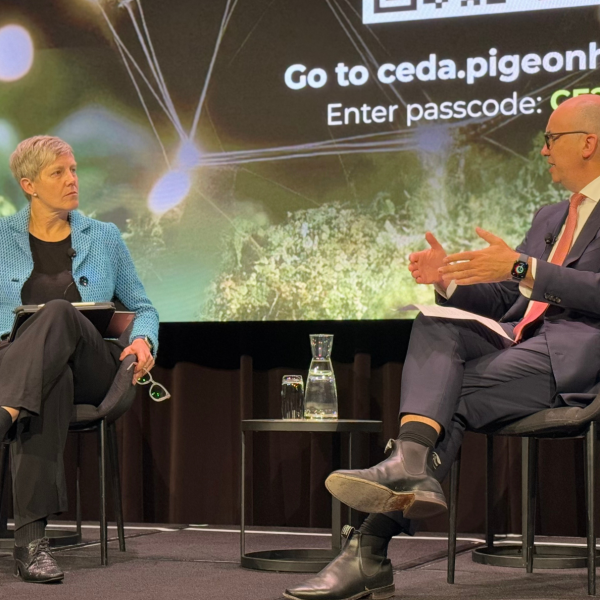
During the CEDA Climate and Energy Summit, Climate Change Authority Chair Matt Kean outlined Australia’s climate and energy outlook, highlighting observed…
Households are becoming central participants in Australia’s energy transformation. With the right regulatory framework and ongoing innovation, electrification,…
Air Conditioning, Refrigeration, Building Services Exhibition
The Hon. Matt Kean Chair - Climate Change Authority
Check against delivery.
May I acknowledge the Traditional Owners of Narrm, the Wurundjeri Woi-wurrung people of the Kulin Nation where we meet today, and pay my respects to elders, past and present. And of course, I extend that respect to any First Nations people here with us today.
I want to thank the Air Conditioning, Refrigeration and Building Services Industry Alliance for the opportunity to speak with you today.
The daily shocks of the war in Iran may seem a long way from the day-to-day challenges you face as consultants, manufacturers, engineers and businesses trying to meet the needs of your customers.
But the systems designed, specified and installed by the people in this room are part of what determines whether Australia is exposed to that volatility — or shielded from it.
The market shocks engendered by events in the Middle East serve to remind us that energy security and costs pulse through every part of the economy.
It’s about our capacity to deliver reliable and affordable energy.
We can either keep designing buildings that need energy provided through increasingly volatile global markets, or make different choices now to double down on electrification and embrace home-grown energy that harnesses Australia’s abundance of clean, natural resources.
In our pursuit of decarbonisation, we have the resources, the capital, the capability and increasingly the technology needed to make that leap.
And the built environment – the homes and buildings we rely on every day – are already central to that story.
After all, buildings account for approximately one quarter of Australia’s final energy use. That makes this sector not just part of the transition — but one of its control points.
And the benefits go beyond energy security.
Moving from gas to efficient electric technologies improves indoor air quality and reduces exposure to harmful pollutants in homes and workplaces.
So, it improves the health of the people inside our buildings – and the health of the planet.
Electrification and energy efficiency reduce greenhouse gas emissions by enabling buildings to run on an increasingly clean electricity grid.
In other words, these choices help tackle global warming while reducing costs and improving everyday life for Australians.
Heating, ventilation and air conditioning (HVAC) systems are a major driver of peak demand, with energy-intensive cooling in summer and heating during winter. That means decisions made in HVAC design and specification now shape not just individual buildings, but how resilient and affordable the whole energy system becomes.
But let me take a step back, and unpack the underlying case for action.
The built environment directly accounted for around 5% of Australia’s national emissions in 2024. More significantly, the built environment indirectly accounted for a further 16% of Australia’s emissions from the generation of electricity used to heat, cool and power buildings.
Here, the focus needs to be squarely on decarbonisation – reducing the emissions associated with how buildings are powered, heated and cooled, and relying increasingly on renewable electricity.
These actions would make a significant and cost-effective contribution to reducing emissions across the economy, and meeting our national targets.
Many of the solutions are already available and being deployed – from efficient equipment and better design to electrification.
We need to accelerate the uptake of solutions that already stack up.
We can already see what good looks like…
All-electric homes without gas connections are cheaper to run and ready for a renewable grid. Commercial buildings are upgrading to efficient electric systems, cutting costs while meeting tenant demand.
These are not future concepts – they are happening now.
The Climateworks Centre found that quick-fix thermal upgrades packaged with fully electrified appliances deliver net benefits for most Australian households. These upgrades, combined with rooftop solar, provide average annual net savings of between $900 and $1,600 from the first year.
Through tools developed by the National Australian Building Energy Rating System program, commercial building participants have achieved an average of 30 – 40% less energy use over a 10-year period.
Many of these opportunities sit within building services – particularly in heating and cooling – where decisions made today can shape energy use and emissions for decades.
When the Authority released its advice on Australia’s 2035 emission reduction targets, we made clear that the solutions for reducing emissions in the built environment are already available and cost-effective.
By 2030, through energy efficiency alone, existing commercial buildings could cost-effectively reduce their total energy consumption by an average of a third, saving 340 megajoules per square metre per building – and save Australia 40 petajoules of energy in aggregate.
But we need to go further and faster.
For buildings that currently rely on a mix of electricity and gas, moving to electric systems is becoming the logical next step.
Electrification, combined with energy efficiency, reduces energy use, lowers running costs over time, and creates healthier indoor environments.
Treasury’s research shows that electrification of household heating can reduce a typical household’s running costs by $860 per year, after accounting for upfront and financing costs. In addition, also reduces the household’s emissions by 18%.
Electrification is also good for our health. Pollutants from gas cooking and heating appliances are linked to higher rates of childhood asthma. Exposure to gas stove emissions is associated with over 12% of the total asthma burden in children aged 14 years or under.
And the opportunities are not limited to electrification of household appliances. More than 4 million Australians households now have rooftop solar – not as a statement of ideology, but because it reduces bills and increases control over energy use.
So, our job is to continue to identify the policy solutions and settings that emphasise there is real value for investing in decarbonisation of the built environment.
Energy efficiency is consistently one of the lowest-cost ways to reduce emissions and should be seen as a compelling proposition for commercial property owners, homebuyers and tenants.
The Authority explored those opportunities in a series of reports in recent years.
In our 2035 emission reduction targets advice, for example, we made the point that the nation’s commercial building stock could make a meaningful contribution to progress if a significant number were electrified – and almost all new commercial buildings designed as all-electric from 2030.
Buildings that are efficient and all-electric are not only lower-emissions – they are cheaper to run and healthier for the people who live and work in them.
This recommendation would require changes to the National Construction Code and other broader reforms – ultimately decisions for elected leaders.
But whether standards rise isn’t really the question anymore. The question is whether industry gets ahead of them – or waits and absorbs the disruption later. The government is expanding the Commercial Buildings Disclosure program and modernising the Greenhouse and Energy Minimum Standards (GEMS) scheme to help Australian businesses, industry and households make more informed choices when choosing their buildings and appliances.
And some states and territories are incentivising retrofits by requiring the disclosure of energy performance ratings of residential buildings at the point of sale or lease. Energy efficiency disclosure has been operating in the ACT since 1997, and research has shown a 3% increase in home value for every additional star rating.
Mandating minimum energy performance standards for rental properties is another option.
Our 2025 Annual Progress Report also referenced the potential benefits of incentives to increase the use of electric appliances for space heating, water heating, and cooking.
The Authority has also had refrigerant gases on our radar for several years, because they have typically been a source of extremely potent greenhouse gases.
In fact, we estimated that they accounted for almost one-third of the built environment’s Scope 1 emissions in 2022.
However, our 2023 Annual Progress Report identified the emerging shift towards refrigerants that make a far lower contribution to global warming.
At that time the cleaner alternatives made up less than 10% of the market, demonstrating that viable alternatives exist – so we recommended governments do more to drive take up at scale.
It’s a point the Authority reinforced in our 2035 Targets advice, where we emphasised that most appliances using refrigerant gases can be replaced with systems with a substantially lower impact.
We raised the prospect of the Government placing further limits on the global warming potential of refrigerant gases and appliances.
It’s an approach already in place in markets like the European Union and Japan, where they have zeroed in on commercial refrigeration and stationary air-conditioning.
So, where it’s practical and feasible to embed the benefits of clean energy technology and solutions today, we should grab the opportunity.
It will deliver dividends in the form of better energy efficiency and lower costs and add to the momentum of economy-wide decarbonisation that helps us meet the nation’s emission-reduction goals.
The case for faster action in buildings is no longer theoretical.
The technologies exist.
The economics are improving.
And Australians are already moving.
It means scaling what works, removing barriers to electrification, and ensuring new buildings are fit for the future from day one.
Because the decisions made in this sector don’t just shape buildings – they shape the energy system, the economy, and the everyday lives of Australians.
That’s the challenge – and the opportunity – in front of us.
And I’m pleased to be joined by a panel of experts who are already helping to turn that ambition into reality.
During the CEDA Climate and Energy Summit, Climate Change Authority Chair Matt Kean outlined Australia’s climate and energy outlook, highlighting observed…
Strong public climate science is essential for understanding emerging risks, improving extreme‑weather forecasting, and helping Australia prepare for a hotter,…
The Hon. Matt Kean Chair - Climate Change Authority
Check against delivery.
May I begin by acknowledging the Wurundjeri Woi-wurrung people of the Kulin Nation as the traditional owners of the lands we meet on today, and pay my respects to their elders, past and present.
It’s an honour to address this Climate and Energy Summit on behalf of the Climate Change Authority. Thanks to CEDA for the invitation, and for assembling so many great speakers for this timely event.
Back in mid-February when I accepted this invitation to speak, I had planned to highlight how shifting to clean energy and away from fossil fuels would bring cost savings for households and businesses, alike.
Decarbonisation, in other words, is good for the planet but also increasingly good for our finances.
Indeed, nature’s blessings of abundant sunshine and wind above, and a treasure trove of critical minerals below, gift Australia the pole position in this transition race.
The war in the Middle East, in revealing our fossil fuel vulnerabilities, fortifies every link in the logic chain that I was going to lay out for you.
It gives me no comfort whatsoever that the pain being experienced at the bowser by motorists every day, nor the anxiety farmers face in securing needed fertiliser, is adding to the economic case to decarbonise.
Amid the market shocks, it is even more important that we make the right calls when it comes to delivering real energy – and climate – security for Australians.
Some of the recent reactions, such as a push to open up new oil and gas fields, are – at a gut level – perhaps understandable.
But we shouldn’t let these market disruptions push us down costly cul-de-sacs that won’t lower energy costs. If we do, they will add to the economic and emission burdens future generations won’t thank us for.
Where you and I – and probably every energy minister in our region – see this oil and gas crisis as a clarion call to cut our dependency on these volatile commodities, some – including vested interests – would have us increase that exposure.
Australia’s energy security can be enhanced by boosting output of homegrown electrons – rather than importing or prospecting for more fossil molecules – and the technology to do that is already being rolled out at scale.
But before I explore those issues, let’s remind ourselves about the climate challenges we face, whatever happens in the Strait of Hormuz.
As a former Treasurer of NSW, I had a front-row seat in tallying up the costs of disasters being made worse by our warming world.
That vantage point included having to rally funding for the 2022 floods in northern NSW that cost billions of dollars, and were part of the third-most costly extreme weather event in the nation, according to the Insurance Council of Australia(Opens in a new tab/window).
The bouts of floods across northern Australia in recent months will no doubt need costly rebuilding and restocking. Remote First Nations’ communities, in particular, are finding life that bit harder.
Northern Australia, of course, also has to cope with tropical cyclones.
As the Climate Change Authority noted last year, scientists predict a greater proportion of cyclones will reach severe strength because of the warmer atmosphere and oceans. That means category 3, or stronger, tempests.
Parts of Queensland, the Northern Territory, and Western Australia have got some reconstruction work to do thanks to cyclone Narelle, a burden not made easier by any bump in fuel costs or any shortages.
Lastly, as many of you know, the past three years were the three hottest years, globally, on record.
2026 will almost certainly be placed in the top five, especially if – as seems increasingly likely – an El Niño event takes hold in the Pacific.
In other words, drought and elevated fire risks may compete with the Middle East for news headlines and our attention before too long.
Let’s hope these early forecasts are wrong!
So, we now have energy security competing with the imperatives to act on climate change.
In some ways, we’ve been here before.
A quick scan of Trove will reveal that the first Iran-related energy scare, back in the late 1970s, threw up schemes to convert coal-to-oil.
There was even a plan to develop Queensland’s Taroom Basin’s oil reserves, a region lately back in the news.
An obvious point is that those projects didn’t proceed back then.
The economics are likely to be even more formidable today, not least because we have far more competitive clean-tech options – and they are getting more competitive every year.
And that’s without taking into account the climate and other environmental issues – such as water access – that should temper enthusiasm about developing new, high-cost fossil fuels in remote regions.
In any case, projects that will take years, perhaps even a decade, to build won’t address any near-term energy constraints.
So let’s look at the cleaner, cheaper alternatives that are ready and raring to go right now.
For starters, a solar farm can be built in two years or less, a big battery plant even sooner.
A wind farm typically takes longer but it's another scalable technology that – along with solar and storage – tends to become more efficient and cheaper with each doubling of output.
Last year, we saw estimates that about two-thirds(Opens in a new tab/window) of the investment in new energy sources globally in 2025 would be in non-fossil fuel sources, according to the International Energy Agency.
Similarly important developments are evident on our roads, too.
In the Climate Change Authority’s advice to government on Australia’s 2035 emissions targets, we scoped out various paths to reach 62 to 70% below 2005 levels.
These included the prospect that half of all cars sold over the next decade could be electric vehicles.
Let me tease that out in a simple thought experiment, to reveal the enduring fuel security benefits.
If Australia were to build a new conventional refinery, it would likely take the better part of a decade to deliver and, on indicative figures, add petrol output equivalent to only a modest share – around one-sixth – of national demand.
By contrast, if half of all new cars sold over the next 10 years were electric – which is one of the plausible pathways we examined – that would steadily and permanently cut demand for imported oil.
Over the decade, the reduction in liquid fuel demand would be material; by the end of the period, the cut could be of the order of one-third of annual petrol demand.
That is not a complete answer to every liquid fuel challenge, particularly for agricultural and industrial users of diesel, as well as freight and aviation.
But it would mean that, year after year, more of our transport task is being powered by Australian electricity rather than imported oil. That is what enduring resilience looks like.
One consequence of the soaring fuel prices is that drivers can’t fail to notice them when they pass any service station.
Not surprisingly there has been a big jump in interest lately in electric vehicles and hybrids.
Whether that interest ebbs or surges hinges on how developments in the Middle East play out, and that’s anybody’s guess at this point.
But what can’t be denied is that EVs are becoming more competitive over time given the in-built energy efficiency of electrons over what we describe – for now – as conventionally powered vehicles.
Yes, there are some who might hold out for a vehicle that can drive from Melbourne to Sydney and back on one charge, but we can’t please everybody all at once!
The point is that the cost of running an EV versus a petrol or diesel – powered one was already lower before the Iran war. That edge will be sharpened, the longer fossil fuel prices remain elevated.
The cost of buying a new EV was already on track to match alternative models within a year or two.
Many buyers, particularly if they have solar energy at home, or the on-site means of charging an EV, may now place a higher value of energy security than previously.
The national New Vehicle Efficiency Standard paved the way for an increase in the EV model selection available to Australians.
Governments at all levels are smoothing the EV adoption path further by building more public charging locations, and some are even providing apartment blocks incentives to wire-up for future charging needs.
This shift is not limited to our cars. In industries like mining, electric dump trucks are being introduced and Fortescue is even commissioning electric(Opens in a new tab/window) locomotives that can recover as much as 60% of their energy through carting iron ore downhill – saving around a million litres of diesel every year.
That’s about half-way to being a perpetual-motion machine, such are the wonders of battery storage with a little help from gravity!
This also raises a broader policy question.
As electrified and hybrid options start to become viable in parts of mining and other diesel-intensive industries, governments will need to examine whether existing diesel tax settings are aligned with the resilience and productivity gains we want to encourage.
Public support should do as much as possible to help bring forward genuine fuel-switching and productivity gains, rather than underwriting business as usual.
Not everybody can switch to an EV, and some may not want to. That’s fine, and governments can play some useful roles here, too.
Low-carbon liquid fuels are an option. We’ve seen that Queensland has lately invested $25 million(Opens in a new tab/window) to help produce renewable diesel at the Lytton refinery – one example of how existing fuel infrastructure can be adapted for lower-carbon alternatives – and more such ventures will likely attract investors.
Similarly, sustainable aviation fuel may also prove more competitive than previously anticipated.
Australia’s relatively abundant land and farming expertise already positioned the country to be a supplier of sustainable aviation fuel (SAF), as it’s known, before the latest geopolitical gyrations.
There is another opportunity emerging at that same Lytton refinery. A proposed Brisbane Renewable Fuels project could produce sustainable aviation fuel at a scale that is genuinely material to domestic demand.
For aviation – one of the harder sectors to decarbonise – that is exactly the sort of capability we should be trying to bring forward. But these projects do not just appear because they make sense on paper.
They need enough policy certainty, early enough, for investment decisions to be made, feedstocks to be secured, and domestic supply chains to take shape here in Australia.
So if governments are thinking about where new fuel capability and policy certainty are most valuable, there is a strong case for prioritising the lower-carbon fuels we will need in harder-to-abate sectors, rather than trying to recreate more of the old fossil system.
Australian innovation can play an important role in other relatively hard-to-replace liquid fuel markets too.
While electric trucks may be grabbing large shares of the market already in places like China and parts of Europe, Australia’s long-distance road freight will probably take longer to electrify.
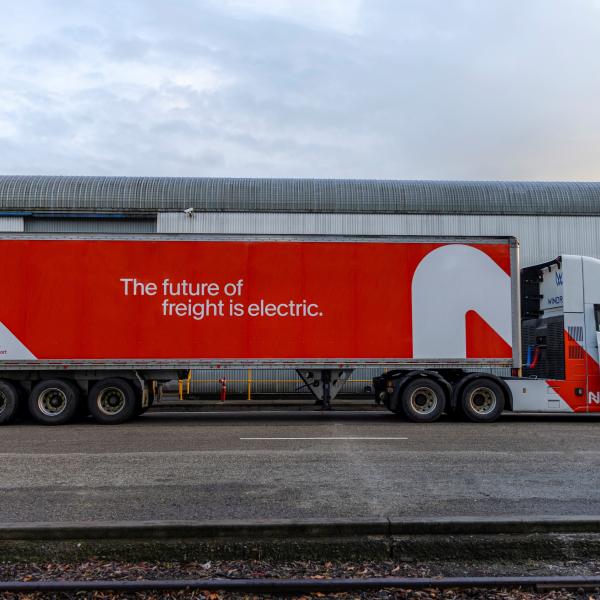
Nascent technology from companies such as VE Motion(Opens in a new tab/window) based in Murray Bridge, South Australia, may offer competitive, near-term answers.
They’re building and testing hybrid systems that pair diesel-powered prime movers with electric motors on the axles of the trailer.
According to co-founder and CEO Dean Panos, Australia builds 30% of the prime movers on our roads, but up to 95% of the trailers.
Their devices can HALVE diesel use and improve truck performance, much like EV cars typically offer owners a superior drive over standard varieties.
Before the latest Middle East war, Panos estimated the payback for the investment would be 3 to 5 years. Should diesel prices stay where they are, the payback period is more like 18 months to 2 years, he says.
The company predicts 100s of trucks will be fitted with their devices in a couple of years, but if the Australian Design Rules approval can be shortened – without any safety corners being cut – the take-up could be in the thousands, and sooner.
Noting transport has been the fastest source of carbon emissions growth, actions that help flatten and reduce truck emissions would have added health and environmental benefits. This switch would also improve the balance sheets of truckies across the nation.
Diesel has been one of the fuels in notably short-supply in regional Australia, and it’s not just used for hauling freight.
About 3% of diesel is used in Australia goes to generate electricity, mostly at remote mines that are off the grid, and in Indigenous communities.
The spread of low-cost solar and batteries – including solar farms that can be dismantled when the ores run out at a particular mine site – will increasingly reduce demand for that diesel.
That will spare the fuel for other uses, such as farming. That industry, too, is finding that innovations, such as the spread of solar-powered water pumps, reduce if not eliminate the need for diesel.
The high cost of diesel and petrol – and concerns about potential future rationing or supply interruptions – will no doubt spur other inventions and create new markets for nimble entrepreneurs.
That’s why we should take heart from the progress being made across a range of low- or zero-carbon industries.
And let’s not forget that stable policy matters, not just for the consumers and businesses trying to make their best choices, but also for investors like many of you in this room today.
After all, the fastest, most efficient route between two locations is rarely – if ever – via zig-zags and the proverbial U-turn!
An orderly course reduces cost-of-living pressures via lower wholesale electricity prices, and enhances Australia’s renewables export potential.
And so, to conclude, the convulsions in commodity prices in recent months only underscore our national interest in remaining on the decarbonisation course.
The UK’s Climate Change Committee, our equivalent in London, found(Opens in a new tab/window) that the total additional cost of a single fossil fuel spike of the magnitude of 2022’s crisis precipitated by Russia’s illegal invasion of Ukraine was as large as the entire combined cost of meeting that country’s pathway to net zero.
The current crisis shows every sign of causing a much bigger blow to the UK economy – and who would wager on this one being the last such fossil-fuelled shock?
Our destination hasn’t changed, but excuses for delay get less and less credible.
Shifting economics are transforming what had seemed niche technology to become necessary and compelling clean energy options to compulsory ones.
Add all that up, and the incremental can become the exponential for the benefit of our economy and the environment alike – and the future generations of Australians to come!
Strong public climate science is essential for understanding emerging risks, improving extreme‑weather forecasting, and helping Australia prepare for a hotter,…
The Authority’s fourth Annual Progress Report finds that Australia is accelerating emissions reduction, but more is needed to meet our targets and adaptation…
Welcome to the latest edition of On Good Authority. This fortnight, we take a closer look at the 2024 National Inventory Report(Opens in a new tab/window), which shows Australia needs to reduce emissions faster to stay on track for the government’s 2035 target of 62-70%. There are also 2 new Australian Carbon Credit Unit methods which draw on First Nation fire carbon management practices. And there’s good news about the emissions of Australia’shighest greenhouse gas emitting facilities in recently released Safeguard Mechanism data.
Do you have ideas for how the Authority can monitor Australia’s progress towards a prosperous, resilient, net zero future? We are developing an Evidence Platform that will, over time, provide a balanced picture of Australia’s climate progress. Time is running out to have your say through our 2026 Evidence Platform Issues Paper(Opens in a new tab/window). Submissions close 30 April.
Welcome to this fortnight's edition of On Good Authority. EV sales have hit an all-time high in Australia, while electric trucks recently beat expectations on cost and travel time in a delivery from Sydney to Canberra. Meanwhile, new Australian government guidance for data centres and AI infrastructure aims to promote renewable energy use. And India, which is one of our top 5 trading partners, has a new emissions reduction target.
Do you have ideas for how the Authority can monitor Australia’s progress towards a prosperous, resilient, net zero future? Work is underway to develop an Evidence Platform that will, over time, provide a balanced picture of Australia’s climate progress. Have your say through our 2026 Evidence Platform Issues Paper(Opens in a new tab/window). Submissions close 30 April.
We’re hiring!
Applications for ongoing and non-ongoing roles in our Analysis Branch and our Systems and Science Branch will close on 12 April 2026:
Households are becoming central participants in Australia’s energy transformation. With the right regulatory framework and ongoing innovation, electrification,…
Welcome to this fortnight’s On Good Authority. This edition, we take a closer look at a call from our Chair Matt Kean for superannuation funds to seize the rapidly expanding opportunities of the clean energy transition. In other news, the UK’s Climate Change Committee has found that the benefits of the net zero transition far outweigh the costs. And agricultural waste has successfully been trialled in India as a low emissions feedstock for steel.
Have your say on a tool the Authority is developing to inform its advice on how Australia is tracking toward a prosperous, resilient, net zero future. The Evidence Platform Issues Paper is open to public submissions until 30 April 2026. You can find further information on our consultation hub(Opens in a new tab/window).
12 March – panel moderation at the Australian Renewables Fuels Summit. The panel explored how sustainable liquid fuels, particularly sustainable aviation fuel, will be essential for sectors like aviation where alternatives to liquid fuels are limited.
18 March – a speech at the Danish Royal Visit Renewable Energy Seminar(Opens in a new tab/window), Melbourne outlined Australia's rapid progress in renewables and the need to accelerate clean‑energy investment as climate pressures grow.
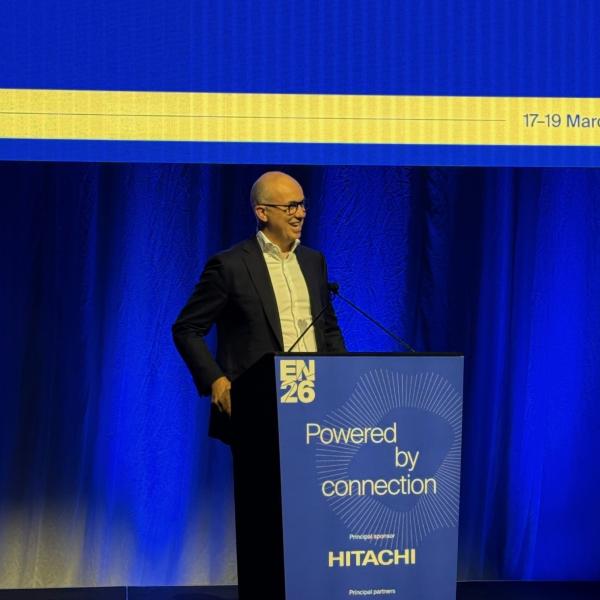
19 March – an opening address at the Energy Network 26 conference(Opens in a new tab/window), Adelaide focused on Australia’s rapid shift to home batteries and electrification, stressing the need for flexible regulation and smarter energy systems.
We’re hiring! Applications are open for roles in our Analysis Branch and our Systems and Science Branch. For more information, visit the Employment(Opens in a new tab/window) page on our website.
Decarbonisation and better land management can strengthen regional communities by boosting farm resilience, reducing emissions and unlocking new economic…
Catastrophe and Reinsurance Symposium keynote speech
The Hon. Matt Kean Chair - Climate Change Authority
Check against delivery.
May I begin by acknowledging the Guringal people, the traditional owners and custodians of the land where we gather.
I’d like to pay my respects to elders, past, present and emerging, and extend that respect to any First Nations people here with us today
It’s a real pleasure to address this year’s Catastrophe and Reinsurance Symposium just a couple of days after some pretty heavy overnight downpours across this region of Sydney.
And there’s tropical cyclone Narelle in the process of crossing the far north Queensland coast during this speech, potentially as a severe category 5 storm.
I won’t be offended if some of you keep a wary eye on your phones – but if the bulk of you start looking fixated elsewhere I might get worried!
As it happens, it’s very timely for us to be exploring the role of public scientific organisations, particularly in Australia.
Some of you may know the Climate Change Authority last month held a roundtable of key government agencies and departments, scientists and end-users in Canberra to examine how climate science and modelling is faring in Australia.
More on that later.
Many of you will also be aware that our premier public scientific agency, the Commonwealth Scientific and Industrial Research Organisation, or CSIRO, is currently consulting on changes to its research portfolio.
So today I want to detail 2 examples of how public science supports research in the national – indeed international – interest.
Others can point to health or even quantum batteries but I’ll stick with climate.
Let me start with the more obscure of the 2 case studies as the effects of Narelle may become clearer the longer the address goes on, making it harder for me to keep your attention.
Scientific discovery can often be taken for granted, but things we observe and understand now were once not known or misunderstood.
Then along came some smart person or team, who conducted an experiment or joined a few data dots that others hadn’t done before.
Many of us have some notion of the ozone hole over Antarctica, and the human-made chemicals that destroyed the ozone layer.
You might also know that ozone serves as a protective shield screening out about 98% of the sun’s medium-frequency ultraviolet radiation.
Without it, we’d get sunburnt after a few minutes of exposure, crops would wilt, phytoplankton would die, and so on.
You might also know we went from discovery of the ozone hole – by the publicly-funded British Antarctic Survey – in 1985, to signing the Montreal Protocol to combat the use of ozone-eating CFC chemicals, in just 2 years.
Foundational science made that ozone hole detection possible and then informed governments of the consequences and they acted.
It’ll take another 4 or 5 decades for the hole to be closed if current policies remain in place but at least we’re headed in the right direction, according to the United Nations (UNEP, 2023).
It’s tempting to reflect on our global failure – so far – to make sizable cuts in greenhouse gas emissions even though the science of global warming is unassailable.
We can, though, point to progress in lowering the emissions trajectory.
The war in the Middle East has lately given us an energy security imperative to wean ourselves off fossil fuels to add to the climate one.
I raised the ozone example, though, to underscore that we humans are conducting a giant experiment on our biosphere and the consequences of what we’re doing might not be fully evident.
Scientists are our sentinels, providing early warnings about risks that might seem obscure and prove to be minimal or turn out to be a much bigger problem.
Now to the obscure bit.
Let’s say there’s a molecule that helps break down methane and other non-carbon-dioxide gases in the atmosphere.
And let’s say that without that molecule, those heat-trapping gases hang around longer and will warm up our atmosphere yet more, exacerbating all the climate change effects that you in this audience are already trying to insure against or mitigate.
And let’s say this molecule disappears about a second after doing its job.
Wouldn’t you like to know how that molecule is going – is there as much up there as before the industrial revolution, say – and how would we go about finding out?
That helpful scrubber’s name is hydroxyl, which involves a single hydrogen atom bonding to an oxygen atom.
Hands up who in here has ever heard of hydroxyl?
Not so many.
And who but public-good science would ever embark on a mission of discovery about such a radical?
CSIRO, as it happens, led by a senior researcher, David Etheridge, working with a team that included scientists from the Universities of Washington and Rochester in the US backed up by Australia’s Antarctic science division.
The project has been underway since 2018, and involved drilling ice cores at least 240 metres deep in Antarctica’s Law Dome and they’re looking to drill in Greenland, too (before it changes hands?).
Why dig up ancient ice?
Well, they are looking for a proxy molecule – the carbon-14 isotope of monoxide – and all that accumulated snow at Law Dome has protected carbon-14 levels from cosmic ray going back centuries.
I won’t spoil the final research results – you'll have to read about it after Dr Etheridge’s peers have finished their review, likely later this year.
But they will inform us whether hydroxyls are keeping up with all the scrubbing of methane and other greenhouse gases that we’ve been asking of them.
Perhaps we’re doing fine – or perhaps we’re going to find out that the warming we’re inflicting on the planet is actually going to accelerate even on present emissions levels.
Obscure but important work, I’d argue and I think you’d agree.
Phew, still with me?
Let me give a more straightforward example of the contribution of public science...one that my dear friend and fellow member of the Authority, Australia’s Chief Scientist Tony Haymet recently discussed at a scientists’ gathering in Hobart.
I should note that Tony, a former senior CSIRO oceanographer himself, also has more than a few shrewd insights about the value of supporting research in the national interest.
This second example is also about Antarctica because what happens in the extreme south can have a big influence on weather over Australia...even in normally benign and balmy places like Manly.
That remoteness is important to underline because it's not easy – or cheap – work to do.
To get accurate readings of polar vortexes, ice-shelf melting, sea-ice movements, and so forth, you need a sophisticated array of satellites, sea- and ice-based instruments, and a lot of brave souls who don’t mind the cold!
And, as Australia can’t do it all alone, we need to work in concert with many partners including, you guessed it, public scientific organisations.
Some of you might remember researchers and weather forecasters – here and abroad – getting excited last September by an unexpected event taking place some 40 kilometres above the icy continent.
The usually frigid polar vortex was observed to be heating up to about 35 degrees Celsius above normal in what’s dubbed a sudden stratospheric warming.
In the Northern Hemisphere, such events happen about every other year over the North Pole, but they are quite rare over Antarctica.
Sudden stratospheric warming matters to us because these events can influence extreme weather in the mid-latitudes – that is, where we and most Australians live.
And that indeed is what Australia witnessed in the months after last September.
The seasonal forecast issued by the Bureau of Meteorology – another vital public organisation – switched from favouring the odds for a wet spring, as is more typical in a La Nina year, to a drier outlook.
Stronger westerly winds likely added to drought conditions in southern Australia, primed the bush to burn, and increased the likelihood of the record-breaking heatwaves that we endured across parts of southeastern Australia in January.
Farmers, firefighters and regional communities were among those with a visceral stake in detecting phenomena such as stratospheric warming events.
I would add insurers and re-insurers to that list.
How might these warming events change in a hotter world? I think Australians have a stake in knowing.
Who is going to provide that information?
Perhaps the private sector could marshal the components – from satellites to surface-based sensors – but what would they charge us? Would they be transparent and accountable?
Beyond the detection and warning about sudden shifts in the stratosphere, communities are going to want to know more generally how wilder weather in a hotter world is going to affect them.
How will their health, housing, jobs and the wider economy be impacted by climate change?
We do have some guidance, such as from the first National Climate Risk Assessment.
That report, released last year, drew on research from publicly-supported science but also commercial entities such as insurers.
As broad and comprehensive that assessment is – and I commend it to your reading lists if you haven’t scoured it yet – the report noted some key knowledge gaps.
(The authority has recommended we do such assessments regularly to help close those gaps.)
The report, though, didn’t anticipate the terrible oceanic algal blooms that have been bedevilling the South Australian coast amid marine heatwaves, and other disturbances to the natural order.
Nature is going to throw up surprises, not all of them pleasant ones.
In any case, understanding how rainfall will change over Australia as the climate warms up would be of great interest to farmers, to households and to businesses, such as infrastructure managers and, yes, insurers.
Andy Hogg, the head of ACCESS-NRI, the publicly-funded science organisation that helps develop our key weather models, knows a bit about knowledge gaps.
He told the Senate inquiry last week that the global climate model ensembles we tap into cannot – yet – tell us whether rainfall in our biggest food bowl, the Murray Darling Basin, will go up or down as the planet heats up.
Professor Hogg says one reason is that our rainfall depends largely on what’s going on in the Southern Ocean and the Pacific.
The climate modelling nations are mostly in the northern hemisphere – and they tend to focus, naturally, on oceans nearer them.
In a call to support funding for CSIRO – which feeds ACCESS-NRI – Professor Hogg said that if we’re not prepared to fund modelling here, it will be harder to make the advances in prediction we need to be able to, say, forecast whether we’re facing a drier – or wetter – Murray Darling Basin.
Or perhaps we’ll get more rain when it falls, and longer droughts in between.
Incidentally, the Government is due to conduct its decadal review of the Basin Plan this year and will have to advise on potential climate change impacts.
It was in the spirit of such challenges that the Climate Change Authority convened a roundtable on climate science and modelling last month in Canberra, as I mentioned at the start of this address.
Developing and maintaining Australia’s world-class expertise in climate science is very much in our national interest.
It is needed, for example, to know whether we should strengthen or extend our cyclone construction codes in our tropical regions something we had advocated in our Home safe report in the wake of Cyclone Alfred last year.
That billion-dollar storm might have been much more costly had it maintained a track that at one stage had it landing much closer to Brisbane and the highly populated regions of southeast Queensland and northern NSW.
We’re going to spend many billions, perhaps trillions of dollars in the decades ahead to lift the resilience of our communities, and to repair those hard-hit by wild weather.
Wouldn’t we be wiser if we were able to narrow the range of risks so that we adapt rather than mal-adapt in a warmer world?
Gaining that sort of expertise would not only give us a competitive edge, by the way, but it would be of interest to our neighbours and partners in the Pacific and elsewhere.
Gathering and storing that climate intelligence is, of course, of little use if we don’t have adequate super computers and storage to hold such data.
And having such information is not much use if such data is not carefully modelled and analysed, and accessible to the people who need it.
Needless to say, there are a few interested parties in this room.
The roundtable, we hope, raised the salient points not just among those invited but for a range of relevant ministries, too.
Our newsfeeds tell us every morning that there are many claims on the attention of our policymakers at all levels of government.
I hope today’s address has helped provide some insights into why public science matters...and that Narelle hasn’t diverted your attention too much either!
Happy to take your questions and thanks for listening!
The Hon Matt Kean Chair - Climate Change Authority
Check against delivery.
May I begin by acknowledging the Kaurna people as the traditional owners and custodians of the land on which we meet today.
I’d like to pay my respects to elders, past, present and emerging, and extend that respect to any First Nations people here with us today.
Can I also thank Energy Networks Australia for the invitation to address you at EN26.
We line in unpredictable times, but that doesn't mean we can't anticipate certain trends that are sufficiently "mega" to reshape our lives, no matter the political or geopolitical cycles.
One of those trends involves a subject - no doubt much discussed at this timely conference – the electrification of just about everything.
This electro-revolution will create exciting new opportunities for consumers and companies alike.
Regulators will have to be nimble if we’re going to maximise the potential for innovation – and importantly, ensure that households get their fair share of the benefits.
The surprising – indeed, stunning – success of the take-up of home batteries reveals the scale of appetite in the community for new products and new ways of managing energy.
As of yesterday, we were just shy of 280,000 storage units installed under the Government’s Cheaper Home Battery Program since last July.
Indeed, in the program’s first eight months, more storage capacity has been added than the 12 largest in-service big batteries combined, according to the Clean Energy Regulator.
Back in July, the average battery going in was about 17 kilowatt-hours, now the average storage unit exceeds 30 kilowatt-hours.
These takeup rates have seen the government revise up its original estimates of $2.3 billion in support to an estimated $7.2 billion over the next four years. And while support for larger units will be pared back from 1 May, it’s clear likely household enthusiasm for storage has a way to run yet.
It’s worth noting too that of Australia’s 4.2 million homes with solar panels, about half of these solar units are smaller than 6 kilowatts of capacity.
As batteries roll out, we can expect upgrades of solar systems to follow. New solar systems already average about 10 kilowatts in size, according to Green Energy Markets.
The rapid evolution of this segment of the industry will require a few adjustments when the Australian Energy Market Operator finalises its Integrated System Plan by mid-year.
Its draft ISP(Opens in a new tab/window), released j last October, expected households' storage capacity to rise to 10 Gigawatt-hours by 2029-30, but in fact, we’ve already surpassed that level and we’re not even to the end of the first quarter of 2026.
The price of lithium-ion batteries has been falling for some years, dropping by more than a third between 2022 and 2025 even as demand soared, according to Bloomberg New Energy Finance.
That price reduction is making it possible to envisage much greater application of storage, whether in the form of large solar-battery hybrid projects or even standalone power systems in remote parts of Australia.
For instance, Western Power, WA’s state-owned regional electricity network operator, has been piloting how to reduce so-called fringe-of-grid customers with standalone power systems and no wonder, 52% of the company’s network serves just 3% of its clients, according to RMIT energy veteran, Alan Pears.
Install solar panels, storage and a back-up generator, and hey presto!
- the supply becomes MORE reliable
- solar meets up to 95% of total power needs,
- customers are happier
- and it’s cheaper than upgrading the poles and wires over great distances, according to the results of a pilot program.
These are the types of disruptive innovations that, - if well-coordinated, could reduce total investment needs, while delivering a more resilient grid and lower carbon emissions to boot.
While those system benefits are important, I would like to conclude by circling back to the theme of electrification, and what these changes might mean for households.
What we need to focus on, though, is USEFUL energy It’s not much good if half your energy supply is wasted.
A recent report(Opens in a new tab/window) by the CCA’s counterpart in the UK, the Climate Change Committee, calculated that country’s energy system, dominated as it is by oil and gas, required 1900 terawatt-hours of primary energy to generate a useful energy output of around 900 TWh.
On a per-household basis, the annual cost of that wasted energy was the equivalent of about $A3750, or 2000 pounds – even excluding the cost of the carbon emissions.
The fuel efficiency of a typical combined-cycle gas power station in the UK is only 54%, the report found.
Australia’s average fuel efficiency in power generation would be much lower, given our aging fleet of coal plants.
“Renewable sources such as wind and solar do not face these economic losses,” the UK report noted.
Electric vehicles, meanwhile, are up to four times more efficient than a typical petrol car. That’s an extra reason to get off imported liquid fuels.
And heat pumps, use between a third and quarter the energy of gas boilers, the UK report found.
AEMO, as it happens, has been also trying to calculate the benefits of residential and small commercial customers shifting from gas to electricity and their results echo the UK’s.
AEMO’s Gas-Electricity Meter Data Linking Project(Opens in a new tab/window) - not quite the snappiest of titles – found standalone homes in Melbourne and Geelong with electric heating, electric hot water and rooftop solar were using 54 gigajoules less gas on average, compared with houses with gas heating, gas hot water and no solar.
The lack of gas use isn’t so surprising but interestingly, the electric-centric homes were importing just 0.1 megawatt-hours more electricity from the grid to run their more-efficient appliances and exporting 3.8 megawatt-hours of power back to the grid, as a bonus.
Homes in milder climates, such as in Newcastle, Sydney and Wollongong, also saw big drops in gas use. They drew a bit more power from the grid but also exported more from their solar panels than the homes in Victoria.
Among the takeaways from the AEMO report is that the spread of electrification of appliances – plus electric vehicles – will shift peak demand increasingly from summer to winter.
Home energy storage and advanced load-shifting technologies will play an important role in balancing demand peaks and troughs, and easing strains on the grid, AEMO found.
With the right regulatory settings and incentives for consumers and energy firms alike, these changes are entirely manageable.
To sum up, then, “Power to the people” is no longer the mantra of the Hippy Era but a lived reality for many, and those legions will keep growing in number.
Networks that can change with the times will prosper too.
Thanks for listening, and all the best for the rest of the conference.
The Hon. Matt Kean Chair - Climate Change Authority
Check against delivery.
May I begin by acknowledging the traditional owners and custodians of the land where we gather today, the peoples of the Kulin Nation.
I’d like to pay my respects to elders, past, present and emerging, and extend that respect to any First Nations people here with us today.
Can I also thank the Danish Embassy for inviting me to speak during the first Danish state visit to Australia in 4 decades, led by their Royal Highnesses, King Frederik X and Queen Mary.
If only we could tap the warmth of the welcome extended their way, we could probably decarbonise a large swathe of our industry!
I’m pleased, though, to have an opportunity to share some reflections with you on Australia’s renewable energy roll-out.
The good news is that we are making strong progress – and there’s scope for even faster gains in the years ahead.
Let me reel off a few key points:
Our main electricity grids sourced a majority of energy from renewable sources in the final quarter of 2025(Opens in a new tab/window) – and for the first time, fossil fuels have accounted for less than half of total supply.
The rise of renewables more than kept up with the growth in demand, so we saw emissions drop in the main grid – the National Electricity Market – by more than 6% compared with the December quarter of 2024. That shows we can cut carbon pollution even as we meet record demand.
Wholesale prices in the National Electricity Market fell 44% from a year earlier. More big batteries and a jump in wind generation made a difference – reducing price volatility to just one-sixth of the level of the December quarter of 2024.
More than a third of Australian homes have solar panels, and the ratio is about half in some regions, such as South Australia – that’s world-leading.
Many of these households have leapt at the opportunity to install home batteries under a government support scheme launched last July. The take-up has already reached about 275,000(Opens in a new tab/window), with more than 6 gigawatts of capacity added. That’s a doubling of capacity in just over 8 months.
These are exciting times to be involved in clean energy, in all its forms, great and small.
We know we have a lot more work to do. Some 17 gigawatts of coal-power capacity is due to retire by 2035, according to Bloomberg New Energy Finance.
The electricity sector and investors understand well that in replacing this capacity, the finances stack up much better for clean energy.
For instance, Bloomberg estimated the cost of new coal at about 4 times the cost of building a solar farm, and almost triple the cost of onshore wind farms.
With the cost of batteries now falling at a pace reminiscent of solar panels during their steep dive, it is no wonder that many of the new projects coming online(Opens in a new tab/window) in Australia will be solar-battery hybrids or even wind-battery ones.
Amidst the current global turmoil, it’s easy to miss the progress that’s being made.
Take this location, for example.
Back on 27 January, Victoria set a record temperature for any month at a tad under 49 °C. Not surprisingly, electricity demand hit a record high as all those air conditioners in Melbourne and elsewhere thrummed away.
These are the stress tests our grid – and our societies – will increasingly face as the planet heats up. Wilder extremes will test our infrastructure, and we need to prepare for it.
On that day of severe heat, though, I’m happy to report the power grid in this state did exceptionally well. Victoria was exporting power for much of the day, and there was little price volatility even as the sun went down.
There also were no lack of reserve alerts issued by the market regulator – no small feat given the strain on supplies that day, and one that the media largely missed.
Australian Council of Superannuation Investors keynote speech
The Hon. Matt Kean Chair - Climate Change Authority
Check against delivery.
May I begin by acknowledging the Gadigal people of the Eora Nation as the traditional owners of the land on which we meet today.
I’d like to pay my respects to elders, past, present and emerging, and extend that respect to any First Nations people here with us today.
Can I also thank the Australian Council of Superannuation Investors group for the invitation to address you today on the challenges and opportunities for Australia posed by climate change.
I’m also looking forward to joining a panel and hearing from two old friends – Amanda McKenzie, co-founder and CEO of the Climate Council, and Anna Skarbek AM, the CEO of the Climateworks Centre.
Both have contributed so much to advancing Australians’ knowledge of climate change – and what we can all do to address it.
There is, after all, so much at stake.
On the carrot side of the equation, Australia is uniquely blessed among nations to benefit from a decarbonising world. We enjoy abundant renewable resources in the skies above, and a periodic table of critical minerals beneath our feet.
On the stick end, Australia’s exposure to extreme heat and see-sawing rainfall totals leaves us vulnerable to a more chaotic climate that scientists are already detecting as the planet gets hotter.
With so much concerning news arriving on our channels and in our feeds of late, it’s understandable for us to lose sight of these opportunities and challenges – some of which are already here.
As superannuation investors, I understand you doface some dilemmas in allocating your $4.5 trillion or so in assets.
How do you invest to maximise returns for your members – both in these turbulent times, but also for those members who will retire in 10, 20 or 30 years or further yet into the future?
If Australia really is to have a net-zero emissions economy by 2050, do the investments you expect to generate returns to super holders from incorporate that goal? Mid-century is only 24 years away, after all.
By some measures, we’ll need half a trillion dollars of investment to re-tool our economy over the next couple of decades. The Business Council of Australia estimated the investment range to hit the upper end of the 2035 emissions goal alone at between $200-$500 billion.
The more disorderly the transition, without clear targets and policies, the larger that outlay will be – with increased uncertainty for jobs and increased likelihood of stranded assets.
For superfunds, some of the financial risks from climate change have been set out by the Australian Prudential Regulation Authority, or APRA, in its CPG 229 report.(Opens in a new tab/window)
No doubt many of you will be familiar with it.
These risks include the physical – such as from floods, to cite a present calamity being endured in large regions of Australia’s centre and north.
Then there are the transition risks, mostly related to Australia’s exposure to decarbonisation trends.
As a major fossil fuel exporter, Australia may well see the value of our shipments and gas and coal diminish – particularly if our main trading partners take a cue from the current war in the Middle East to accelerate the take-up of clean energy sources.
And thirdly, there are the liability risks that result from the potential for litigation where – and I cite here from the APRA document – “institutions and boards do not adequately consider or respond to the impacts of climate change”.
That’s a lot of risk to weigh up. So how are superfunds’ investments lining up with a decarbonised economy at home and abroad? We do know that Australia needs billions of dollars invested each year in our electricity grid – both to replace the aging and increasingly uncompetitive coal-fired power plants and build additional generation and transmission capacity to meet rising power demand.
Certainly, there are critics who note Australian super funds are largely absent from, say, investing in renewable energy here. A report last year by the Conexus Institute(Opens in a new tab/window) estimated that the amount of capital allocated to climate-related investments was less than 1% of super industry’s total.
Some investors here today might raise legitimate reasons for shying away from clean energy investments in Australia – and point out they have found more attractive investments in this sector elsewhere in the world.
However, I would note that foreign investors, many of them pension funds, have found Australia an attractive destination to invest in large-scale wind and solar farms, and now batteries, in a big way.
If there are barriers that discourage you from parking more of your funds in the low-carbon industries in Australia, your collective voice and financial clout can make a difference.
I would encourage you to use that voice to speak up.
Lately, we’ve also seen recent media coverage of the 50-odd executives from our super industry on a road trip to the United States.
No doubt those fund managers will be keeping in mind their obligations to account for those climate change-related risks I detailed a few minutes ago.
The US has long been an attractive destination for Australian funds. And that country has been investing heavily in clean tech – whether in solar plants in Texas or big batteries in California – and those projects may be appealing to the visiting investors.
In general, though, Australians should be curious to understand how their super funds are aligning their investments so that the climate risks and opportunities are being addressed.
The present turmoil on commodity markets because of the Middle East war highlights the folly of seeking to shore up energy security by investing more into fossil fuels. It makes the imperative to accelerate the decarbonisation of the economy clear.
Sunlight can’t get stranded in the Strait of Hormuz.
There really is a lot riding on how we respond.
And as APRA itself notes in its prudential practice guide, Australia’s adaptation to climate change won’t just carry risks, it will bring new business opportunities. Prudent managers must take both into account.
And one final thought.
Some of you might have seen a report(Opens in a new tab/window) last week from our counterparts in the UK, the Climate Change Committee, on that nation’s seventh carbon budget.
A timely takeaway was the report’s estimate of the cost of a single fossil fuel shock – the 2022 Russian invasion of Ukraine.
That cost, to households, businesses and the Exchequer or Treasury, was likely to be as large as the total net additional cost of its so-called Balanced Pathway to net zero by 2050.
“Achieving net zero was found to be a more cost-effective path for the UK economy than continued reliance on fossil fuels,” the UK report found.
And that’s from just one fossil fuel shock.
Economic and fiscal – along with environmental – prudence suggests we should do all that we can to reduce our exposure to such shocks.
Thanks for listening, and I look forward to joining the panel shortly to field your questions with Anna and Amanda.